
Table of Contents
- Understanding Your Rights After an Uber Accident
- Why Uber Accidents Require Specialized Legal Guidance
- Immediate Actions to Protect Your Case
- Preserving Evidence at the Accident Scene
- Documenting Medical Treatment and Expenses
- Navigating Insurance Claims and Uber’s Liability Coverage
- How We Investigate Uber Accident Cases
- California Statute of Limitations for Rideshare Accidents
- Calculating Your Full Compensation for Damages
- Why You Need an Experienced Rideshare Accident Attorney
- Contact Us for Your Free Consultation
- Frequently Asked Questions (FAQ)
Understanding Your Rights After an Uber Accident
If you were injured in an Uber accident, you have rights—and time is limited to exercise them. The stakes are real: medical bills pile up, lost wages cut into your ability to recover, and insurance companies often undervalue injury claims. We understand this pressure. At Weinberger Law Firm, we help injured passengers and pedestrians navigate the complex intersection of California law, rideshare liability, and insurance negotiation to pursue the full compensation you deserve.
You have rights after an accident, regardless of whether you were an Uber passenger, a driver, or a pedestrian struck by an Uber vehicle. California law holds at-fault parties liable for damages caused by their negligence. In rideshare accidents, liability can fall on the Uber driver, Uber itself (in certain circumstances), other motorists, or even third parties—like manufacturers of faulty vehicle parts.
Your damages claim may include medical expenses, lost income, pain and suffering, permanent disability, and emotional distress. The California legal system recognizes that an injury’s impact extends far beyond the immediate medical bill. Preserving your right to recover means acting quickly: documenting injuries, gathering evidence, and reporting the accident to insurance and law enforcement. We will investigate all available evidence to build the strongest possible case on your behalf.
What to do next: Write down everything you remember about the accident while details are fresh. Include the time, location, weather conditions, what the other driver was doing, and how you felt immediately afterward.
Why Uber Accidents Require Specialized Legal Guidance
Rideshare accidents differ fundamentally from standard car accidents. Uber operates under a hybrid insurance model where coverage depends on the driver’s status at the moment of impact: whether they were logged into the app, actively transporting a passenger, or between rides. This complexity means the same accident might trigger different insurance policies depending on timing and driver activity.
Uber’s insurance coverage is often structured to shift liability or limit exposure. We pursue full and fair compensation by investigating the driver’s app status, reviewing Uber’s insurance policies, and identifying all responsible parties. Many injured riders try to settle directly with Uber or their own insurance company without legal counsel—a mistake that often results in settlements far below what their case is worth.
Insurance adjusters are trained to minimize payouts. We negotiate from a position of strength, backed by evidence and litigation readiness. Your claim deserves someone who understands rideshare liability inside and out.
What to do next: Do not communicate with Uber or any insurance company until you have legal representation. Statements made early can be used against you later.
Immediate Actions to Protect Your Case
Your first priority after any accident is safety and medical care. Move to a safe location if possible, call 911 if anyone is injured, and wait for police to arrive. Medical documentation from the scene is powerful evidence—paramedics’ observations, injury assessments, and initial treatment records create an official record of your condition.
Next, gather information. Get the Uber driver’s name, phone number, vehicle license plate, and driver’s license information. If other vehicles are involved, collect their details too. Ask for the police report number before leaving the scene. Take photos of vehicle damage, your visible injuries, the accident location, road conditions, and traffic signals.
Request medical attention even if you feel “okay.” Some injuries—concussions, internal bleeding, soft tissue damage—may not be immediately apparent. A medical evaluation creates documentation and ensures nothing is missed. Report the accident to Uber through the app; Uber logs this report and triggers their investigation.
What to do next: Keep all documents together: police report, medical records, photos, witness contact information, and any correspondence from insurance. Start a folder (digital or physical) and maintain it throughout your case.
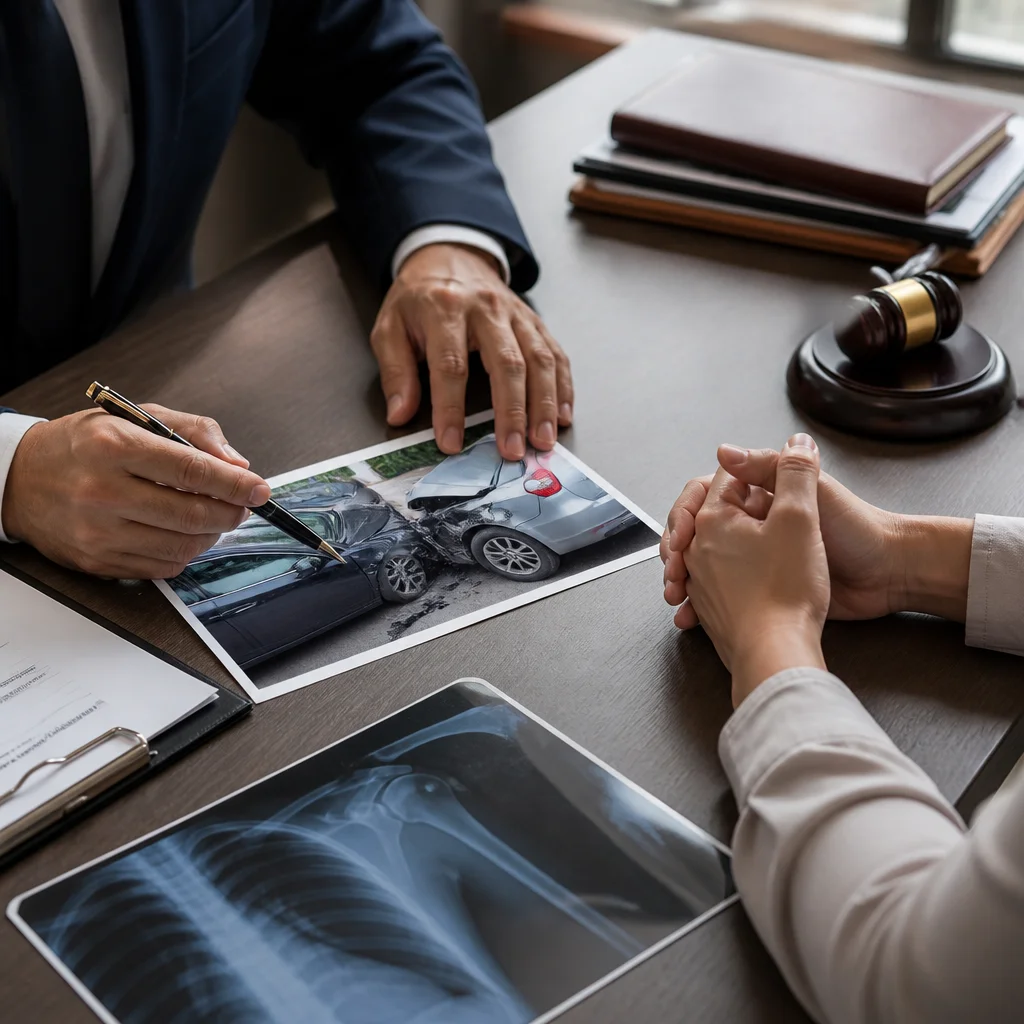
Preserving Evidence at the Accident Scene
Evidence gathered immediately after an accident carries tremendous weight. Traffic camera footage can be decisive—secure this before it disappears. Contact the local police department and the business or municipality that controls nearby cameras. Most footage is retained for 30 to 90 days, so urgency matters.
Witness statements are invaluable. If anyone stopped to help or saw the accident, get their name, phone number, and a brief account of what they observed. Eyewitness accounts often corroborate your version of events and can counter disputes about fault. Write down their observations word-for-word if possible.
Document the accident scene itself: road markings, traffic signs, lighting, weather, and sight lines. These details help reconstruct what happened and whether either driver had a clear view of the other. Vehicle damage patterns often tell the story of impact force and direction—photos are essential.
Preserve your vehicle. Do not repair it immediately; the physical damage is evidence. Insurance adjusters and expert reconstructionists use damage patterns to determine liability and impact severity. We coordinate with you to ensure evidence is preserved while your claim moves forward.
What to do next: Contact the police department within 24 hours to confirm your incident report has been filed and obtain the report number.
Documenting Medical Treatment and Expenses
Medical bills and lost wages are the foundation of your compensation claim. From your first doctor’s visit forward, keep every receipt, invoice, and medical record. This includes emergency room visits, follow-up appointments, prescription medications, physical therapy, imaging (X-rays, MRIs), and mental health treatment if the accident caused emotional trauma.
Track lost income meticulously. Collect pay stubs showing income before the accident, employer statements confirming time missed, and evidence of reduced earning capacity if injuries affect your work long-term. If you are self-employed, document billable hours lost and contracts affected. Insurance companies scrutinize these claims, so precision matters.
Document your pain, limitations, and daily struggles. Keep a brief journal noting symptoms, medications, mobility restrictions, and how the injury affects your work and personal life. This narrative evidence strengthens claims for pain and suffering—a significant portion of many settlements. Courts and insurance companies recognize that injuries carry non-financial costs.
Ongoing treatment strengthens your case. If your doctor recommends continued care, follow through. Gaps in treatment can be misinterpreted as evidence that injuries have healed. We review medical records and work with your healthcare providers to build a complete picture of your injury’s impact.
What to do next: Create a spreadsheet listing all medical providers, dates of service, charges, and what each visit addressed. Update it monthly.
Navigating Insurance Claims and Uber’s Liability Coverage
Understanding the insurance structure is critical. If you were an Uber passenger at the time of the accident, Uber’s commercial insurance typically covers you—provided the driver was logged into the app. If the driver was at fault, Uber’s insurance usually responds. If a third party caused the accident, their insurance is primary, and Uber’s insurance backs up your claim.
The process involves reporting to Uber (done through the app), providing information to your own insurance company, and potentially filing a claim with the at-fault party’s insurer. Each step requires careful communication. Insurance adjusters will contact you; do not provide recorded statements or detailed injury accounts without legal counsel present.
Many claims stall when the insurer disputes liability or undervalues damages. We navigate these disputes on your behalf, presenting evidence, reviewing policy language, and pushing back against lowball offers. We will investigate all available evidence to counter insurer arguments and demonstrate full liability where appropriate.
What to do next: Notify your own insurance company promptly but keep statements brief: “I was injured in an Uber accident. My attorney will provide details.” Then stop communicating with them directly.

How We Investigate Uber Accident Cases
Our investigation process is thorough and evidence-driven. We pull the Uber driver’s app records to confirm their status at the time of impact—a critical fact that determines insurance coverage. We subpoena traffic camera footage, police dashcam recordings, and any video from nearby businesses. These recordings often show exactly what happened when memory and conflicting accounts create doubt.
We interview witnesses, obtain recorded statements from them, and identify expert reconstructionists if the accident’s mechanics are disputed. We review the other driver’s background, insurance history, and prior accident reports to establish a pattern if negligence is evident. We also analyze Uber’s driver screening process—if the driver had a history of violations or safety complaints, that strengthens your claim against Uber itself.
Medical causation is equally important. We work with your treating physicians and, if necessary, independent medical experts to document that your injuries result directly from the accident. Insurance companies sometimes argue that pre-existing conditions, not the accident, caused your symptoms. We build a factual record that isolates the accident’s impact.
What to do next: Schedule a free consultation with us so we can begin investigation immediately while evidence is fresh.
California Statute of Limitations for Rideshare Accidents
The statute of limitations—the filing deadline—is two years from the date of your accident for personal injury claims in California. Two years may sound like plenty of time, but it passes quickly when you are focused on recovery. Missing this deadline means losing your right to sue, regardless of your claim’s merit or value.
We recommend filing claims within the first few months after an accident, not the last weeks before deadline. Early filing creates leverage in settlement negotiations. Insurance companies know we are serious and ready to litigate. Last-minute filings suggest desperation and weaken our negotiating position.
Additionally, the sooner we investigate, the better. Witness memories fade, evidence disappears, and details become murky. A prompt investigation while facts are clear and accessible significantly improves case outcomes. Time is limited—act now to protect your rights and maximize recovery.
What to do next: Contact our office today. Do not assume you have time to decide later. The clock started running the moment of your accident.
Calculating Your Full Compensation for Damages
Compensation in personal injury cases falls into two categories: economic and non-economic damages. Economic damages are quantifiable: medical bills, lost wages, future medical care, and reduced earning capacity. Non-economic damages include pain and suffering, emotional distress, loss of enjoyment of life, and permanent disability.
California does not cap non-economic damages in personal injury cases (caps apply only to medical malpractice). This means a severe injury—permanent scarring, chronic pain, mobility loss—can support substantial pain-and-suffering awards. We calculate these damages by analyzing comparable settlements, jury verdicts, injury severity, age, occupation, and prognosis.
Insurance companies often offer settlements that cover medical bills and some lost wages while grossly undervaluing pain and suffering. A broken bone that heals fully might seem “minor,” but three months of immobility, lost wages, and ongoing physical therapy is significant. We pursue full and fair compensation by presenting your complete injury narrative—not just numbers, but the human impact.
We pursue full and fair compensation by analyzing market value for similar injuries, documenting all losses meticulously, and presenting evidence that justifies higher valuations. Our goal is to recover every dollar you are legally entitled to.
What to do next: Gather all financial documents: medical bills, pay stubs, receipts for medical equipment, and estimates for future care.
Why You Need an Experienced Rideshare Accident Attorney

Handling an Uber accident claim alone against insurance adjusters and corporate legal teams puts you at a severe disadvantage. Insurance companies employ teams of professionals trained to minimize payouts. They exploit injured people’s stress, medical focus, and unfamiliarity with legal process to secure below-market settlements.
An experienced rideshare accident attorney levels the playing field. We understand Uber’s business model, insurance structure, and common liability arguments. We know how to investigate these cases effectively, which expert witnesses to engage, and how to present evidence compellingly. We negotiate from strength, backed by litigation readiness and a track record of successful outcomes.
At Weinberger Law Firm, we represent injured riders on a contingency basis: no fee unless we recover for you. Your financial risk is zero. We advance costs for investigation, expert witnesses, and litigation—recovering these expenses only if your case succeeds. This alignment means your interests and ours are identical: maximize your recovery.
What to do next: Compare our track record and approach against other firms. Read client reviews. Ask about our experience with rideshare cases specifically.
Contact Us for Your Free Consultation
You do not have to navigate this alone. We offer a free, confidential consultation where we listen to your story, explain your rights, and outline how we can help. We will ask questions to understand your case fully, then advise you honestly about next steps and likely outcomes.
Our consultation is an opportunity to ask every question you have about the legal process, timeline, and what compensation might look like. We provide straight answers without pressure. Many clients find this clarity and reassurance invaluable as they begin recovery.
Contact Weinberger Law Firm today. Reach out by phone or through our website at https://weinbergerlaw.net. Time is limited—act now to protect your rights and secure the full compensation you deserve. We are ready to fight for you.