
Table of Contents
- Why Pain and Suffering Matters After Your Motorcycle Accident
- The Real Impact: Physical and Emotional Costs You Face
- Understanding California’s Pain and Suffering Damages
- How Courts and Insurance Companies Calculate Your Suffering
- Documenting Your Pain and Suffering for Maximum Compensation
- Why Evidence Preservation Is Critical to Your Claim
- Medical Records: Your Foundation for Proving Damages
- How We Investigate and Build Your Pain and Suffering Case
- Negotiating with Insurance Companies for Full Compensation
- Why Time Matters: The Statute of Limitations
- Why You Need Dedicated Legal Support for Complex Claims
- Frequently Asked Questions (FAQ)
Why Pain and Suffering Matters After Your Motorcycle Accident
If you were injured in a motorcycle accident, you have rights after the crash. Pain and suffering damages are often the largest component of your recovery, yet many accident victims overlook or undervalue them. Unlike medical bills and lost wages, which are straightforward to calculate, pain and suffering captures the real human cost of your injury: the chronic pain, emotional trauma, restricted mobility, and lost quality of life that linger long after the initial impact.
Insurance companies know that pain and suffering claims require strong documentation and skilled negotiation. They often minimize these damages or dismiss them altogether. We pursue full and fair compensation because we understand that your suffering is real and legally compensable under California law. Securing fair pain and suffering damages requires evidence, strategy, and an advocate who knows how insurance adjusters and courts evaluate intangible harm.
The Real Impact: Physical and Emotional Costs You Face
A motorcycle accident often causes injuries far more severe than a car collision because riders lack the protection of a vehicle frame or airbags. You may face chronic pain, scarring, nerve damage, or permanent disfigurement. Beyond physical wounds, many riders experience anxiety, depression, post-traumatic stress, or fear of riding again.
Consider these realistic impacts:
- Chronic pain during daily activities (walking, working, sleeping)
- Loss of enjoyment in hobbies or activities you once loved
- Psychological trauma and anxiety related to the accident
- Disfigurement or permanent physical changes affecting self-image
- Reduced earning capacity if injuries limit your career options
- Strained relationships or reduced social engagement
These costs are genuine and measurable through medical records, therapy notes, and testimony. We investigate all available evidence to show how your injuries have affected your life. Documenting this impact early and thoroughly strengthens your claim significantly.
Understanding California’s Pain and Suffering Damages
California law recognizes two types of non-economic damages: pain and suffering, and loss of enjoyment of life. Pain and suffering refers to physical pain, mental anguish, and emotional distress directly caused by your injury. Loss of enjoyment of life covers the inability to engage in activities, hobbies, or relationships you had before the accident.
Unlike economic damages (medical bills, lost wages), pain and suffering damages have no fixed formula. There is no receipt or invoice. Instead, courts and juries evaluate pain and suffering based on the nature of your injuries, their severity, how long recovery will take, and the permanence of any lasting effects. California allows you to seek compensation for past pain and suffering and future pain and suffering you are likely to endure.
The law recognizes that serious injuries cause serious harm beyond financial loss. Your emotional and physical suffering is just as real and deserving of compensation as your medical expenses.
How Courts and Insurance Companies Calculate Your Suffering
Courts and insurers often use two common approaches to evaluate pain and suffering. The multiplier method applies a number (typically 1.5 to 5, or higher for severe injuries) to your total economic damages. For example, if your medical bills and lost wages total $50,000, a multiplier of 3 might suggest $150,000 in pain and suffering. The per diem method assigns a daily dollar amount for your suffering and multiplies it by the number of days you are affected.
Neither method is perfect, and both depend heavily on the strength of your evidence. A severe, permanent injury justifies a higher multiplier than a minor injury with full recovery. Insurance adjusters often use the lowest multiplier possible, which is why we investigate thoroughly and present compelling documentation of your harm.
Jury verdicts in serious motorcycle accident cases frequently exceed these rough calculations when evidence of lasting trauma, permanent disfigurement, or ongoing treatment is clear and credible. Our experience negotiating motorcycle injury claims in California helps us know what fair compensation looks like for your specific injuries.
Documenting Your Pain and Suffering for Maximum Compensation
Strong documentation is everything in a pain and suffering claim. You must create a clear record of how your injuries have affected your daily life. Start now by recording specific examples: days when pain prevented you from working, activities you can no longer do, or emotional struggles you face.
Keep a pain and suffering journal. Write brief, dated entries describing:
- Your physical pain level and what triggers it
- Emotional or psychological symptoms (anxiety, depression, sleep loss)
- Activities you can no longer perform
- Medical appointments, treatments, or therapies
- Impact on family relationships or social life
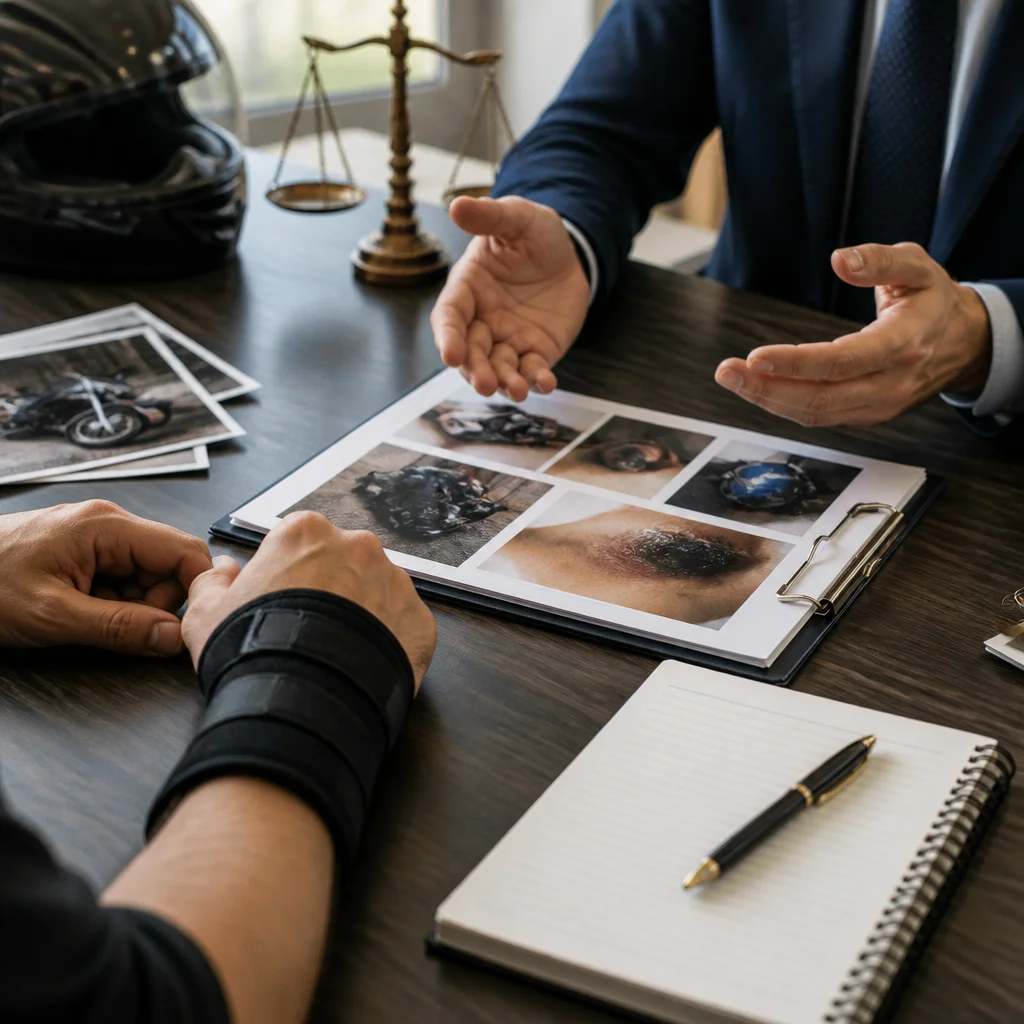
Preserve any evidence that documents your condition: photographs of injuries (especially if permanent scarring or disfigurement exists), prescription bottles, therapy appointment cards, and messages to friends or family describing your struggles. These authentic documents carry more weight than vague recollections months or years later.
Why Evidence Preservation Is Critical to Your Claim
Preserve any evidence and get medical care immediately after the accident. Early medical documentation is powerful proof of injury severity. When you delay treatment, insurance companies argue your injuries were not serious. When you preserve evidence at the scene, you protect your claim.
Critical evidence to preserve includes accident scene photographs, contact information for witnesses, police reports, traffic camera footage, medical imaging (X-rays, MRI scans), and any communications with the at-fault driver or insurance company. We will investigate all available evidence to build the strongest case.
Time is limited — act now. Evidence degrades, memories fade, and witness contact information becomes outdated. The sooner you document everything, the stronger your position. If you delay, crucial proof may be lost forever.
Medical Records: Your Foundation for Proving Damages

Your medical records are the backbone of any pain and suffering claim. They document injury severity, treatment duration, and ongoing care. Medical records create a clear, credible timeline: the initial injury, progression of treatment, setbacks, and long-term outlook.
Gather and organize:
- Emergency room or urgent care reports
- Surgical reports and discharge summaries
- Physical therapy and rehabilitation records
- Mental health or psychology treatment notes
- Prescriptions for pain medication or other treatments
- Follow-up appointment notes from specialists
- Work restrictions or limitations noted by your doctor
Each medical record entry strengthens your claim. When a doctor notes that your pain is severe, that recovery will be long-term, or that permanent effects are likely, that professional assessment carries weight with insurers and juries. We review all medical records carefully to highlight the evidence that best supports your claim.
How We Investigate and Build Your Pain and Suffering Case
We take a comprehensive approach to building your pain and suffering case. Our investigation goes beyond the accident itself to examine how your injuries have changed your life. We interview you thoroughly to understand your specific suffering, then gather supporting evidence.
We coordinate with your medical providers to obtain complete records and clarify the long-term prognosis. If necessary, we work with medical experts who can explain the connection between your injuries and ongoing pain or emotional distress. We also identify and interview witnesses who saw your condition after the accident or observed how your injuries affected you.
For serious cases, we may engage a life-care planner or vocational expert to document future medical needs, lost earning capacity, or permanent lifestyle changes. These professional assessments provide compelling evidence of the true cost of your injury. We present the facts clearly and persuasively to maximize your recovery.
Negotiating with Insurance Companies for Full Compensation
Insurance adjusters are skilled at minimizing pain and suffering claims. They may argue your recovery was faster than your records show, that your pain is exaggerated, or that similar injuries warrant less compensation. We know these tactics because we negotiate with insurers every day.
Our negotiation approach for motorcycle claims combines strong documentation with confident, informed advocacy. We present your medical records, your pain journal, expert assessments, and comparable case verdicts side by side. We clearly explain why your suffering justifies the compensation we demand.
If the insurer’s offer is unfair, we are ready to litigate. Insurance companies know whether we are prepared to take a case to trial. Our litigation readiness strengthens our negotiating position significantly. Many cases settle for full and fair compensation only because we demonstrate we will fight in court if necessary.
Why Time Matters: The Statute of Limitations
The statute of limitations is the deadline to file a claim. In California, you generally have two years from the date of your motorcycle accident to file a personal injury lawsuit. This deadline is strict; if you miss it, you lose your right to recover compensation entirely, regardless of how serious your injuries are.

Do not wait to take action. Gathering evidence, obtaining medical records, and building your case takes time. The sooner you contact us, the sooner we can begin preserving evidence and investigating your claim. Two years sounds like a long time until you realize how quickly it passes when you are managing medical treatment and recovery.
Contact us for a free consultation right away. We will explain your rights and options so you understand exactly what you must do.
Why You Need Dedicated Legal Support for Complex Claims
Pain and suffering claims are complex. They require legal knowledge, investigation skills, negotiation experience, and trial readiness. Handling one alone while managing your recovery is extremely difficult. Insurance companies have teams of adjusters and attorneys working to minimize your claim; you deserve equally strong advocacy.
We have recovered substantial compensation for motorcycle accident victims across California. We understand how courts and juries evaluate pain and suffering in motorcycle cases. We know the medical evidence that persuades decision-makers and the negotiation strategies that work.
No fee unless we recover for you. We work on contingency, meaning you pay nothing upfront and nothing unless we win your case or settle favorably. Your financial risk is zero while our investment in your case is substantial. This aligns our interests completely: we succeed only when you recover fair compensation.
If you have suffered a motorcycle accident, contact Weinberger Law Firm today for a free consultation. We will review your case, explain your rights, and tell you exactly what you can expect. Time is limited — act now to protect your claim and pursue the compensation you deserve.
Contact us today for a Free Case Consultation!
Frequently Asked Questions (FAQ)
What types of damages can we recover for my motorcycle accident pain and suffering in California?
We help you pursue compensation for both economic damages, like medical bills and lost wages, and non-economic damages, which include your pain and suffering, emotional distress, and loss of enjoyment of life. California law recognizes that motorcycle accidents cause significant physical and emotional harm, and we work to ensure you receive fair compensation for all of these impacts. We calculate these damages based on the severity of your injuries, recovery timeline, and how the accident has affected your daily life.
How do we prove pain and suffering to insurance companies and courts?
We build your case through detailed medical records, treatment documentation, personal journals describing your daily struggles, testimony from family and friends, and expert medical opinions. Insurance companies scrutinize pain and suffering claims closely, so we preserve all evidence and present the facts in a compelling way that demonstrates the real impact of your injuries. Our thorough investigation and strategic presentation significantly strengthen your position during negotiations and potential litigation.
Why is acting quickly important for my motorcycle accident claim?
Time is limited because California’s statute of limitations sets a strict filing deadline for personal injury claims, typically two years from your accident date. The sooner we begin our investigation, the easier it is to gather evidence, locate witnesses, and preserve critical information before memories fade. We recommend you contact us immediately after your accident so we can protect your rights and build the strongest possible case for your compensation.