
Table of Contents
- Why Visual Evidence Matters in Your Personal Injury Case
- What Makes Effective Accident Photography Different
- Camera Equipment You Should Use at the Scene
- Step-by-Step Guide to Documenting the Accident Scene
- Video Documentation Best Practices We Recommend
- Preserving and Organizing Your Evidence Properly
- Common Mistakes That Undermine Your Evidence
- How Insurance Companies Evaluate Your Documentation
- Legal Standards for Evidence in California Claims
- Working With Our Team to Strengthen Your Case
- Timeline and Statute of Limitations Considerations
- Next Steps: From Evidence to Fair Compensation
- Frequently Asked Questions (FAQ)
Why Visual Evidence Matters in Your Personal Injury Case
If you’ve been injured in an accident, visual documentation can become the difference between a strong claim and a weak one. Photos and videos create an objective record of what actually happened at the moment of impact, before details fade or scenes are altered. Insurance adjusters, opposing counsel, and juries rely heavily on this kind of evidence because it tells a story without interpretation.
We’ve seen countless cases where compelling scene photos shifted negotiations in our clients’ favor. A clear image of road conditions, debris patterns, property damage, and injury severity speaks louder than memory alone. Medical records show what you suffered; visual evidence shows why. Together, they build an unshakeable foundation for your claim.
The sooner you capture this documentation, the more credible and complete it becomes. Scenes change quickly. Cleanup crews arrive, vehicles are towed, and weather alters conditions. Taking action immediately preserves the truth of that moment and protects your legal standing.
What Makes Effective Accident Photography Different
Effective accident scene photography isn’t about artistic composition. It’s about capturing comprehensive, clear images that prove liability and demonstrate damage scope. Poor lighting, wrong angles, or missing context can render otherwise useful photos questionable in settlement negotiations or court.
Strong accident documentation follows three principles: clarity, context, and completeness. Clarity means sharp focus and adequate lighting so every detail is visible. Context means showing how the accident happened, not just the aftermath. Completeness means photographing from multiple angles and distances to tell the full story.
We advise clients to shoot wide-angle views first, then narrow focus on specific damage, injuries, and hazards. A photo of a pothole is useful only if viewers also see how it relates to where you fell. A vehicle collision image should show the point of impact, surrounding traffic conditions, and road markings.
Your documentation strengthens your case significantly when you combine multiple perspectives and close-up details. This multi-layered approach makes it nearly impossible for an insurance company to dismiss your evidence as incomplete or misrepresentative.
Camera Equipment You Should Use at the Scene
You don’t need professional photography equipment. Your smartphone camera is typically sufficient and has several advantages: it’s always with you, it timestamps images automatically, and modern phones capture surprising detail even in poor lighting.
If your phone is damaged or inaccessible, use any available camera. A basic digital camera, tablet, or even a bystander’s phone works fine. The key is getting images and video at the scene while your memory is fresh and conditions are unchanged. Equipment quality matters far less than capture speed and comprehensiveness.
Smartphone cameras perform best when you:
- Clean the lens before shooting (wipe away dirt or debris)
- Use natural daylight whenever possible
- Avoid standing directly in front of the sun, which creates backlighting and shadows
- Take multiple shots from different angles to ensure at least some are sharp and useful
- Enable your phone’s GPS location tagging so timestamps and location data are embedded
If nighttime is unavoidable, use your phone’s flash and consider asking bystanders to help by holding additional light sources. Quality matters, but presence matters more. An imperfect photo from the scene beats perfect lighting reconstructed later.
Step-by-Step Guide to Documenting the Accident Scene
Your documentation should follow a logical sequence that captures the big picture first, then narrows to specific details.
Start with wide-angle shots of the entire scene. Photograph the area from multiple directions to show road conditions, traffic patterns, weather, signage, and lighting. Include any hazards like potholes, broken pavement, or obstructed views that may have contributed to the accident.
Document vehicle or property damage next. Take close-up photos of each damaged area from at least two angles. Photograph the overall damage profile, then zoom in on individual dents, scratches, broken glass, or structural damage. Include license plates and vehicle identification for context.
Capture your injuries immediately. Document visible injuries, bruises, cuts, or swelling on the day of the accident. Take multiple photos as injuries often look worse over the next few days. Photograph your clothing if it shows damage or blood.
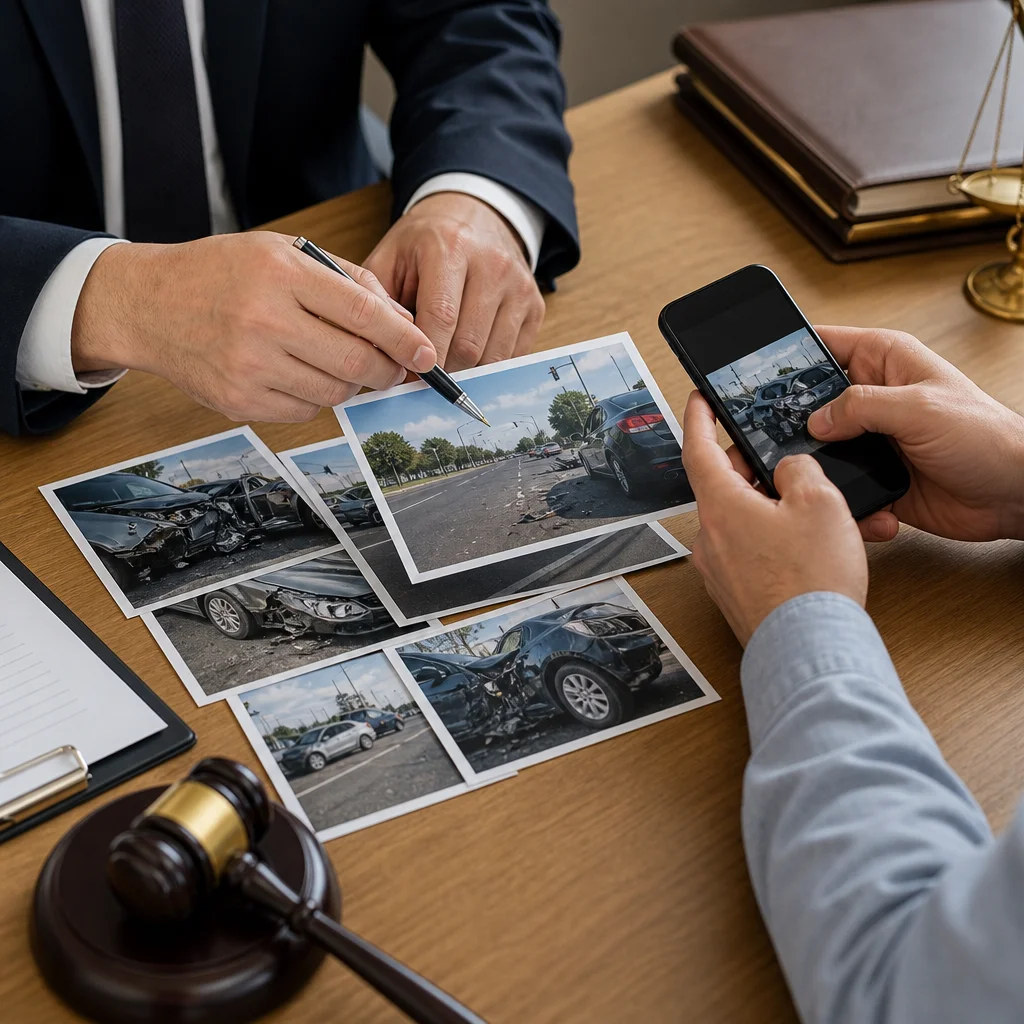
Record witness contact information. While documenting the scene, photograph any visible street signs, business names, or landmarks that establish location. If witnesses are present, get their names and phone numbers written down. A photo of their business card or driver’s license (with permission) provides verification.
Note skid marks, debris, and vehicle positions. These details reveal how the accident occurred. Photograph broken glass, tire marks, spilled contents, or debris fields exactly as they appear before cleanup begins.
Photograph traffic signals, signage, and road markers. These images prove what drivers could see and what rules applied at that location. A photo showing a stop sign obscured by trees or a malfunctioning traffic light strengthens your claim.
Video Documentation Best Practices We Recommend
Video captures movement, context, and spatial relationships in ways still photos cannot. A 30-second video of your accident scene, walking from your vehicle to the point of impact, shows scale, lighting, and line-of-sight obstacles far more effectively than any single image.
Record your video horizontally (landscape mode), which provides wider context and is easier to watch and present. Walk slowly through the scene, narrating what you observe: “This is the intersection where the other vehicle ran the red light. The traffic signal is clearly visible from our direction. There’s no obstruction.” Your calm narration adds credibility and context.
Keep videos short and focused. A 30-second to one-minute video is typically more persuasive than a five-minute ramble. Steady your phone with both hands or lean it against a stable object. Shaky footage weakens impact and is harder to review.
Record video of the surrounding area before entering the scene if possible. This establishes the broader context of location, weather, and conditions. Then transition to close-ups of damage, injuries, and hazards.
Avoid editing or filtering video. Insurance companies and courts distrust heavily manipulated media. A raw, unedited video with poor lighting is far more credible than a polished, edited version. The authenticity matters far more than production quality.
Preserving and Organizing Your Evidence Properly
The moment you capture photos and videos, protect them from loss or damage. Most smartphones store images in cloud services automatically, but don’t rely on this alone. Take active steps to preserve your documentation.
Transfer copies to multiple locations: your email, a cloud storage service like Google Drive or iCloud, and ideally an external hard drive. This three-location backup system ensures your evidence survives device damage, theft, or loss.
Create a simple organizational system with dates and descriptions. Name your files logically: “accident_scene_wide_angle_01.jpg” rather than “IMG_1234.jpg.” Add dates if your device hasn’t already tagged them. Create a separate folder for photos, videos, and any written notes.
Document when and where each photo was taken. Write down the date, time, location address, and a brief description of what each image shows. This metadata becomes crucial later when you’re discussing evidence with our team or presenting to an insurance adjuster.
Keep originals intact and unedited. Never crop, filter, or alter images before sharing with us. We need to see exactly what your camera captured. Once we’ve reviewed your evidence, we may professionally enhance images for presentation purposes, but the originals must remain untouched.
Common Mistakes That Undermine Your Evidence
Many people unintentionally damage their own evidence through well-intentioned but problematic actions. Understanding what to avoid protects your case significantly.
Editing or filtering photos makes them appear manipulated, even if you only brightened a dark image. Insurance companies will question whether the editing conceals or exaggerates damage. Present raw originals and let professionals enhance if needed.
Moving vehicles or objects before photographing creates problems. If you can safely do so, document the scene exactly as it was immediately after the accident. Moving a vehicle to clear traffic might be necessary for safety, but photograph it first if possible.
Photographing only damage without showing context creates confusion. An image of a dent means little without showing how it relates to the point of impact or other vehicles involved.
Discarding damaged clothing or property eliminates physical evidence. Preserve everything involved in the accident, even if it seems insignificant. We can examine these items or photograph them later.
Waiting days or weeks to photograph the scene allows conditions to change. Road cleanup, weather changes, and seasonal variations alter how the scene appears. Earlier documentation is always stronger.
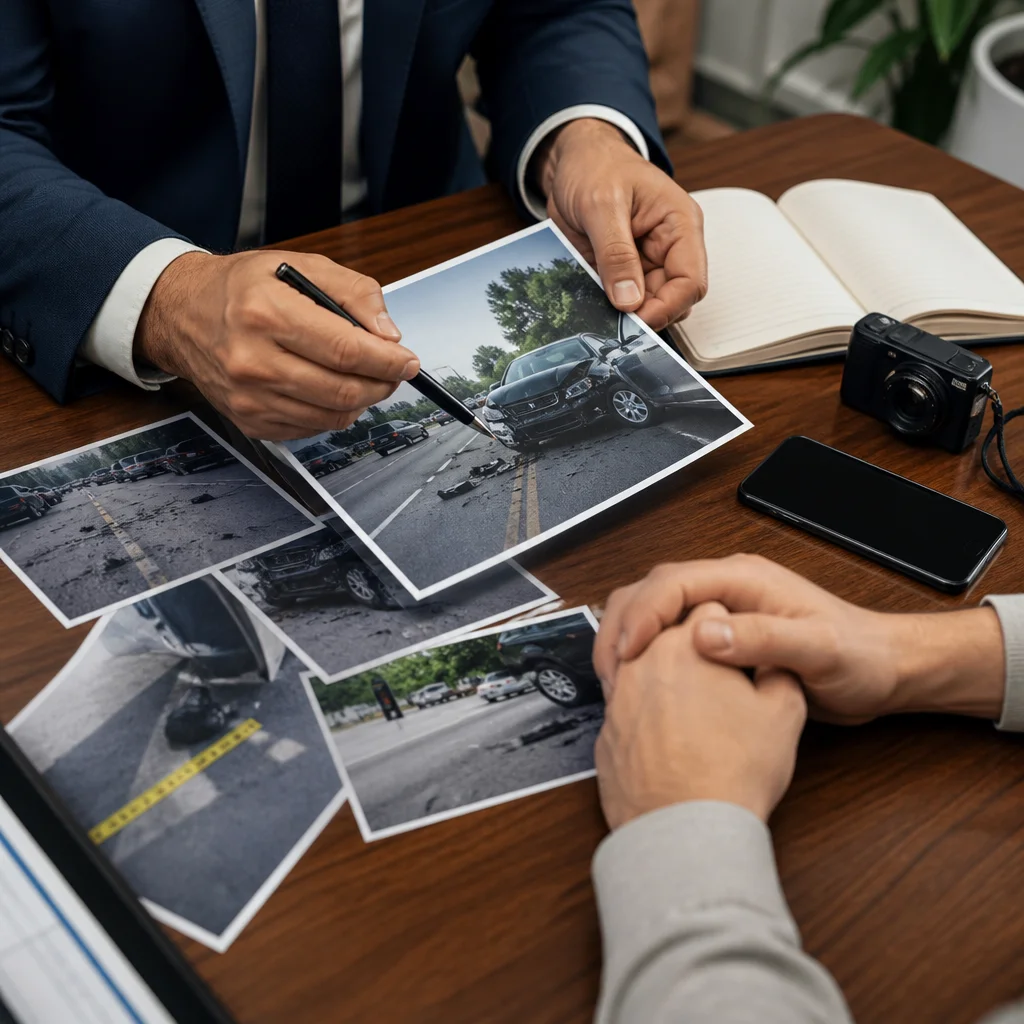
Taking photos only from one angle limits the story. Different perspectives reveal different details. Multiple angles make your evidence harder to dismiss.
How Insurance Companies Evaluate Your Documentation
Insurance adjusters receive thousands of claims annually. They’ve developed sophisticated methods for assessing evidence quality and credibility. Understanding their perspective helps you strengthen your documentation from the start.
Adjusters evaluate photos for clarity, objectivity, and completeness. Sharp, well-lit images with consistent timestamp data suggest reliable documentation. Blurry, poorly-lit, or heavily edited photos raise questions about authenticity.
They look for metadata consistency. Photos taken at the scene immediately after an accident are far more credible than images captured weeks later. Timestamp data, GPS location data, and consistent file properties all matter.
Adjusters assess whether your photos tell a coherent story. Do wide-angle shots match close-up detail images? Does the damage pattern support the accident narrative you describe? Inconsistencies trigger suspicion and invite lower settlement offers.
They compare your documentation against other evidence sources: police reports, medical records, witness statements, and traffic camera footage. When your photos corroborate official reports, their value increases dramatically. When they conflict, adjusters question everything.
Documentation from the accident scene itself carries more weight than later reconstruction photos. A photo taken within hours of the accident appears far more credible than one taken days later after some cleanup has occurred.
This is where our team adds tremendous value. We investigate all available evidence and present your documentation in context with medical records, police reports, and witness testimony. We also identify gaps in your initial documentation and work to fill them through independent investigation and expert analysis.
Legal Standards for Evidence in California Claims
California law recognizes visual evidence as highly persuasive in personal injury claims, but only when it meets certain standards. Understanding these requirements ensures your documentation can actually be used to support your case.
Photos and videos must be authentic and relevant. This means they must accurately depict the accident scene or your injuries, and they must directly relate to your claim. A selfie from weeks after your accident showing a healed injury has limited relevance. A photo taken at the scene showing visible injury has strong relevance.
Evidence should not be prejudicial. This means it shouldn’t inflame emotions or be introduced primarily to upset a jury rather than to prove a fact. A graphic injury photo might be relevant, but only if it’s necessary to prove the extent of your damages.
Chain of custody matters for physical evidence. This simply means tracking who has handled your photos and videos, when, and how. Digital files with preserved metadata, stored securely and unedited, demonstrate strong chain of custody.
Your documentation must survive scrutiny regarding its condition and authenticity. Insurance companies and defense attorneys will question whether images were edited, whether timestamps are accurate, and whether the person who took the photos can verify what they show.
California courts also recognize that real-time video and contemporaneous photos carry the strongest weight because they eliminate issues around recollection, bias, or later reconstruction attempts. The closer your documentation is to the actual moment of injury, the more persuasive it becomes legally.
We navigate these legal standards constantly and understand exactly what documentation strengthens your case under California law. Our experience helps ensure your evidence is captured, preserved, and presented in ways that maximize its legal impact.
Working With Our Team to Strengthen Your Case
When you bring documentation to Weinberger Law Firm, we review it within the context of your entire case. Your photos and videos are one piece of a much larger investigation. We examine them alongside medical records, police reports, witness statements, and our own scene investigation.
We’ll identify what you’ve captured effectively and what gaps remain. If your documentation is incomplete, we investigate independently. We may obtain traffic camera footage from nearby businesses, request police accident reports with measurements and diagrams, or hire accident reconstruction experts to validate your scene documentation.
Our investigation team also looks for additional evidence sources you may not have considered. Security cameras from nearby buildings, dashcam footage from other vehicles, or testimony from people who witnessed the accident all corroborate your visual evidence.
We prepare your documentation for settlement negotiations and potential litigation. If your case proceeds to trial, we ensure your evidence meets all California legal standards and is presented in the most persuasive format possible. We also identify when professional enhancement or expert analysis strengthens your evidence presentation.
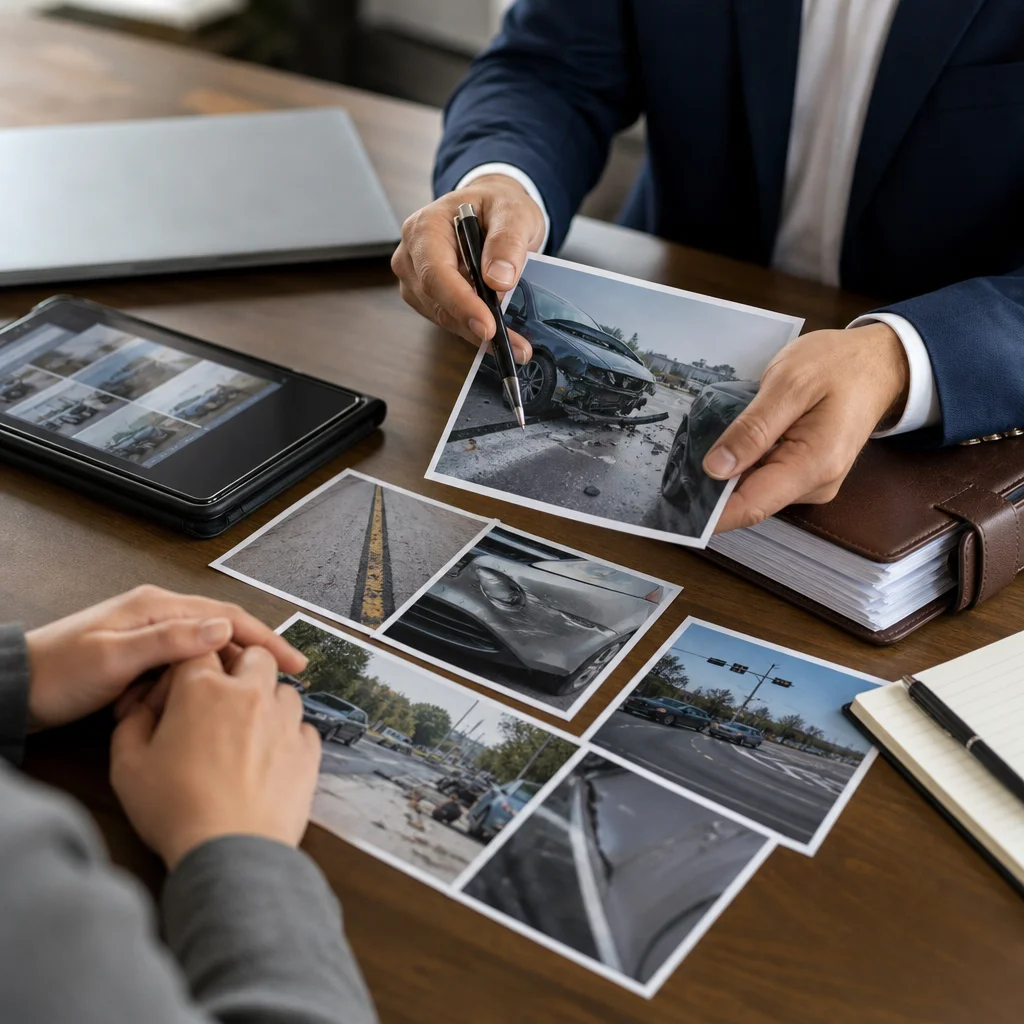
Beyond documentation review, we handle all negotiation with insurance companies. Your visual evidence gives us leverage in these negotiations. Strong scene documentation, combined with medical evidence and our legal expertise, typically results in fair settlements without requiring litigation.
Our role is to transform your evidence into compensation. We do this by preserving your rights, investigating thoroughly, and presenting the strongest possible case to insurance companies and, if necessary, to courts. Contact us for a free consultation to discuss your case and how your documentation fits within our comprehensive strategy.
Timeline and Statute of Limitations Considerations
Time is limited in California personal injury claims. The statute of limitations, or the deadline to file a lawsuit, is typically two years from the date of your injury. This timeline applies to most personal injury cases, though specific exceptions may apply depending on your situation.
Documentation becomes harder to obtain as time passes. Witness memories fade. Scene conditions change. Surveillance footage is recorded over or deleted. The accident scene itself may be cleaned up, repaired, or demolished. This makes immediate documentation critically important.
Filing a lawsuit before the deadline doesn’t require a trial. Most cases settle through negotiation, and having a lawsuit filed simply ensures you preserve your legal right to pursue compensation. We file lawsuits strategically to maintain leverage while settlements are negotiated.
Your injury timeline also matters for damage calculations. Medical bills, lost wages, and ongoing treatment all accumulate over time. The documentation you gather now, combined with medical records you develop as you heal, builds the complete picture of your damages.
We understand California’s injury case timeline intimately. We manage deadlines, preserve evidence, and coordinate investigation with precision. When you work with us, you can focus on healing while we handle the legal complexity and time pressures.
Next Steps: From Evidence to Fair Compensation
Your accident documentation is the foundation of your case, but it’s only the beginning. The path from evidence collection to fair compensation requires strategy, investigation, negotiation, and legal expertise.
Here’s what you should do now: First, document, preserve, and present the facts. If you haven’t already photographed the scene, get images and video immediately if it’s still accessible. Gather any photos or videos others may have captured. Organize everything with dates and descriptions.
Second, get medical care immediately if you haven’t already. Your injuries may be more serious than initially apparent. Medical documentation combined with your scene evidence creates the complete picture of your damages.
Third, contact Weinberger Law Firm for a free consultation. Bring your documentation, medical records, and any insurance correspondence. We’ll review everything, answer your questions about California personal injury law, and explain how we pursue full and fair compensation for our clients.
We work on contingency, meaning no fee unless we recover for you. You pay nothing upfront, and we don’t collect payment unless we secure compensation through settlement or trial verdict.
Your visual evidence matters. Your injuries matter. Your lost wages and medical bills matter. You have rights after an accident, and we’re here to help you exercise them. The evidence you capture today becomes the foundation for the compensation you deserve. Call us today to discuss your case and take the next step toward recovery and fair compensation.
Contact us today for a Free Case Consultation!
Frequently Asked Questions (FAQ)
Why should I photograph the accident scene if I’m injured?
We recommend capturing photos and videos immediately because visual evidence is crucial to proving what happened. Insurance companies rely heavily on documentation to evaluate claims, and your photos create an objective record before details fade or scenes are altered. The more comprehensive your evidence, the stronger your position when we negotiate for full and fair compensation.
What if I don’t have professional camera equipment at the scene?
We understand that most people have a smartphone, and that’s sufficient for documenting an accident. Clear photos from your phone showing vehicle damage, road conditions, traffic signals, and injuries are exactly what we need to build your case. Focus on getting multiple angles and ensure adequate lighting rather than worrying about equipment quality.
How do I preserve evidence properly so it helps my case?
We advise you to store your photos and videos in multiple locations (cloud backup and your phone) immediately after the accident to prevent loss. Keep detailed notes about when and where each photo was taken, and avoid editing or altering any images. Once you contact us for a free consultation, we’ll guide you on organizing this documentation and explain how California courts evaluate visual evidence in personal injury claims.