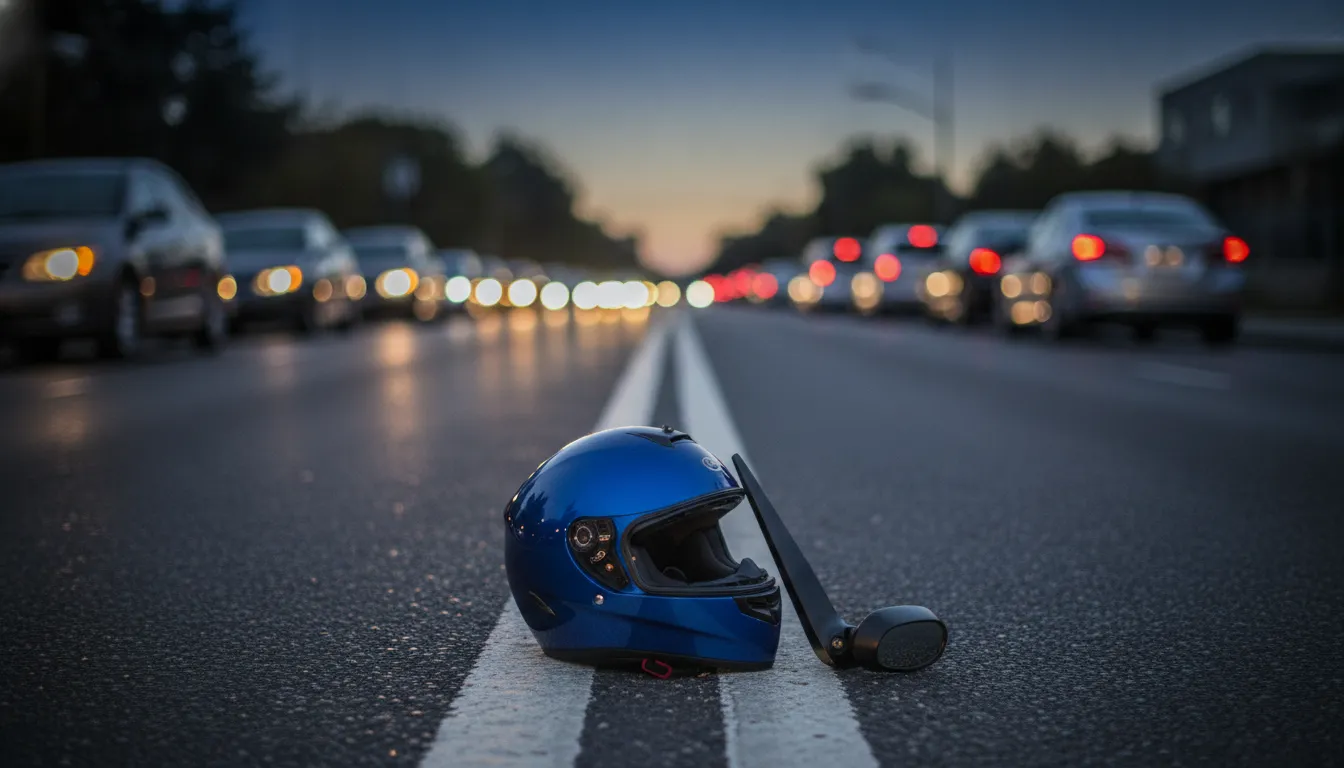
A motorcycle hit while lane splitting in California is not automatically the rider’s fault. Write down which lane the car moved from, whether it signaled, and how fast traffic was crawling. Insurers treat “I was between the cars” as a confession. It is not. California allows the maneuver. The driver who turns across your path still has to move only when it is reasonably safe.
Call Weinberger Law Firm at 916-357-6767 for a free consultation about a motorcycle injury. You pay nothing up front, and you pay a fee only if the firm recovers compensation.
What you say in the first day often matters more than the statute. A speed guess, a mumbled “I was probably going too fast,” or a signature on a broad medical release can become the line the adjuster quotes for months. Sort the facts while the scene is still fresh, and before anyone asks you to narrate it on a recording.
What to record if a motorcycle is hit while lane splitting in California
Do this before you move the bike, if you can do it safely. The gap you were riding in closes as soon as traffic starts moving again. Phone photos are enough. A neat diagram can wait.
- Name the two lanes you were between, counted from the left. “Between 1 and 2” is a fact. “In the middle” is not.
- Say whether the car drifted, changed lanes, or turned. A drift and a turn are different stories, and the report should not blend them.
- Note whether you saw a signal, and for about how long. “No blinker” and “blinker as the car was already crossing” are both useful. “I think there was a signal” is not.
- Describe traffic as stopped, crawling, or moving, and say whether you were only a little faster. Do not invent a miles-per-hour number you never read.
- Get names and numbers from drivers who stopped, and note any dashcam, helmet camera, or business camera that faced the lanes.
- Photograph where the bike ended up, and whether the car’s contact was on the side panel or the rear corner.
A side-panel scrape is a different case from a rear-corner tap. The first suggests the car moved into you. The second is what an insurer cites when it claims you ran into a car that was already there. Photograph both vehicles before they are towed. Include the contact point, the lane line, and the cars still stacked in the rows if they have not moved.
If an officer asks for a statement, stick to what you saw. Do not guess a miles-per-hour figure unless you looked at the speedometer.
Faster than the cars, with traffic stopped or crawling, is a fact you can stand on. A claim that you were doing 40 is a number you may not be able to defend.
That risk grows once someone measures the skid. It also grows when there is no skid at all.
Ask a witness which way the car moved, in their own words. People remember a sudden swerve better than a lane number. Write the sentence down before they leave.
A phone number with no sentence is hard to use a week later. By then the witness has often decided they did not really see it.
The driver’s lane change is a separate duty
Lane splitting is defined in California Vehicle Code section 21658.1. It means riding a two-wheeled motorcycle between rows of stopped or moving vehicles in the same lane, on divided or undivided roads. The section also lets the California Highway Patrol write educational guidelines. It does not say a rider who is hit gives up a claim.
The duty that usually decides the crash is Vehicle Code section 22107. A driver may not turn from a direct course, or move right or left on a roadway, until the move can be made with reasonable safety. If another vehicle may be affected, the driver also has to give the appropriate signal.
A legal lane split does not excuse a lane change made without a look or a signal. Keep the two questions apart. One is whether you were allowed to be between the rows. The other is whether the driver moved into that space only when it was reasonably safe for the vehicles already there, including you.
For when the maneuver is allowed, and how comparative fault can reduce a recovery without ending it, read the firm’s guide to California lane splitting laws and motorcycle accident liability. This article is the next step. It covers what to preserve after the hit, not the general legality question that guide already answers.
Highway Patrol safety materials tell riders to keep a small speed gap with other traffic. They also say to be careful once traffic is moving at an ordinary highway pace. Many riders favor the space between the two leftmost lanes.
Those points are safety advice. They are not a statute that sets a speed limit for splitting. An insurer may still quote them as if they were a rule.
Answer with the conditions you actually faced. Stopped or crawling traffic. A gap wide enough for the bike. Daylight or dark. A car that moved without a real signal. Do not agree that a guideline was a law you broke.
“Reasonable safety” is a facts question. A driver who checks the mirror, signals, and waits for a gap is in a different position from a driver who sees a gap in the car rows and slides over. Your photos of the contact point, and a witness who saw no blinker, are how that difference gets proved. The statute does not do it by itself.
What to say to the insurer, and what to leave for later
The adjuster’s first call is friendly on purpose. You do not have to give a recorded statement that day. You do not have to sign a broad medical release. A recording that includes a speed guess is hard to walk back. A release that covers your whole history lets the insurer hunt for an old injury and blame a concussion, a shoulder, or a knee on that earlier visit.
| What the insurer asks. | Why it is risky that day. | A safer response. |
|---|---|---|
| A recorded statement. | A speed guess gets locked in. | Decline until you have notes and a lawyer. |
| Your exact miles per hour. | Most riders never read the speedometer. | Say if traffic was stopped or crawling. |
| A full medical authorization. | It opens unrelated old records. | Share records for these injuries only. |
| A quick small check. | The check often releases the whole claim. | Do not cash it before the injuries are known. |
Get checked the same day even if you feel able to ride or drive home. Adrenaline hides a concussion, a wrist fracture, and rib pain. A same-day chart ties those injuries to this crash. Waiting a week gives the insurer a gap, and the gap becomes an argument that something else caused the pain.
Tell the clinician, in ordinary words, that a car moved into you while you were riding between lanes of slow traffic. That sentence belongs in the history. The phrase motorcycle accident alone lets a later reader invent the mechanics.
If a body part starts hurting the next morning, go back and say when it started. Silence in the chart reads later as no injury.
If you missed work, ask the employer for a short note of the days and the wage rate while the absence is still on the schedule. Keep the tow bill, the gear you were wearing, and the damaged helmet. Do not repair the bike until the damage has been photographed from several angles, including the side that took the hit and the bars or levers you had to replace. A repaired bike with no photos is a smaller number.
How the crash gets blamed on the rider
Expect the report, and then the insurer, to lean on four facts. None of them ends the claim by itself. Each one can be answered with something you wrote down at the scene.
- Speed. If the report says “unsafe speed” and lists no measurement, ask where the number came from. A witness who says traffic was stopped is useful. Your own offhand “I was flying” is not, even if you meant you were anxious rather than fast.
- Lane position. Riding between the two leftmost lanes is the split other drivers see most often. Splitting beside an on-ramp, or next to a wide truck, is easier to attack. Write down which gap you used, and whether a ramp or a truck was part of it.
- The signal. No blinker, or a blinker that came on as the car was already moving, supports the argument that the move was not made with reasonable safety. A long, obvious signal cuts the other way. Say which one you saw, including “I was looking and there was none.”
- Your lookout. The insurer will say you should have seen the car start to move. That assumes you had time. Time depends on the speed gap and on whether the driver looked before sliding over. A car that moves in one beat is not the same as a car that eases over.
Read the police report as soon as it is available, and correct errors in writing. A diagram that puts you in the wrong lane will be repeated in every later letter. So will a narrative that says you rear-ended a car you actually struck on the side. Ask that the correction be added. Keep a copy of what you sent, and of any reply.
A passenger, if you had one, should write a separate account the same day and should not edit it to match yours. Two identical statements look rehearsed. Two consistent ones, with small differences in what each person noticed, look like memory. The passenger’s view of the blinker is often better than yours, because you were watching the gap.
Save the 911 recording details if you have them, and the time of day. Congestion on a Roseville or Sacramento freeway at commute hour is a different scene from an open road. The time stamp supports “traffic was crawling” better than a later adjective does. If a nearby business or a transit bus may have a camera, note the location that week, not the next month.
Injuries, wages, and the filing clock
A lane-splitting impact is often a side hit. Riders come away with a broken collarbone, a leg pinned against a car, road rash, and a head injury even when the helmet did its job. Treat the chart as part of the claim file. Follow the treatment that is actually recommended. Gaps in care, skipped imaging, and a month of “I thought it would calm down” are the facts adjusters use to cut the number.
The dollars that follow, from medical bills to lost wages, are laid out in the firm’s article on what damages you can claim after a California accident. Do not assume a sore shoulder is minor until someone images it. Soft-tissue claims get discounted when the first visit is weeks later, and a fracture found late is harder to tie to the side impact.
California generally gives an injured adult two years from the crash to file a personal injury lawsuit. That date arrives faster than people expect once a surgery is scheduled, wage loss piles up, and the insurer goes quiet. A government vehicle in the crash, including some transit and public-works vehicles, can require a written notice in a matter of months. Identify the owner of the other vehicle early. Plates, an agency seal, and a unit number all matter, and a rental company’s name on the door is not always the name on the policy.
If riding is how you get to work around Roseville, Sacramento, or Folsom, say so in the claim notes. Commute days and a missed shift are easier to prove with a calendar than with a later estimate. The same is true for a self-employed rider. Invoices you could not finish, and jobs you had to turn down, are worth more than a round number offered months later.
Weinberger Law Firm represents injured motorcycle riders throughout California, with that local focus on the Roseville, Sacramento, and Folsom area. The broader service page for these cases is the firm’s motorcycle accident lawyer page. A consultation is free. The fee is a percentage of what is recovered. It is not a bill you pay to get the file opened, and you do not pay that fee if there is no recovery.
Call Weinberger Law Firm at 916-357-6767 before you give a recorded statement about a lane-splitting crash.
Frequently Asked Questions
Does lane splitting make the crash my fault?
No. Riding between rows of stopped or moving traffic is legal in California. Fault depends on how the driver moved and on the speed, gap, and lookout on both sides. The split itself is not a bar to a claim, and it is not an admission that you caused the hit.
Should I tell the insurer how fast I was going?
Not on a recording, and not as a precise number you did not read off the bike. Describe whether traffic was stopped or moving, and whether you were only a little faster than the cars. A guessed miles-per-hour figure is the line adjusters underline, then repeat in every letter.
What if the police report blames me?
The report is not the last word. Ask for a correction if the diagram, the lane, or the point of impact is wrong, and keep your photos. Side damage and rear-corner damage tell different stories. A written request, with the photos attached, belongs in your file even if the officer does not rewrite the narrative.
How long do I have to file a lawsuit?
An injured adult generally has two years from the crash to sue in California. A claim involving a public agency can require notice much sooner. Do not wait for the insurer to finish its review before you mark the date, especially if the other vehicle may be publicly owned.
Can I still recover if I was faster than traffic?
Often yes. A speed difference can reduce the recovery under comparative fault. It does not automatically wipe out the claim when the driver moved over without a signal or a look. How large the gap was, and whether the move was reasonably safe, are fact questions rather than a yes-or-no rule written into the lane-splitting statute.