
Table of Contents
- Why Motorcycle Accidents Demand Specialized Legal Guidance
- Understanding Your Rights After a California Motorcycle Injury
- How Insurance Companies Handle Motorcycle Injury Claims
- The Critical First Steps to Protect Your Case
- Our Approach to Building a Strong Motorcycle Injury Claim
- Calculating Your Full Compensation Potential
- Why the Statute of Limitations Matters for Your Case
- How We Investigate and Preserve Evidence
- Negotiating with Insurance Companies on Your Behalf
- Preparing for Litigation if Settlement Negotiations Fail
- What to Expect When Working with Our Firm
- Contact Us for Your Free Consultation Today
- Frequently Asked Questions (FAQ)
Why Motorcycle Accidents Demand Specialized Legal Guidance
If you were injured in a motorcycle accident in California, you have rights. The path forward can feel overwhelming when you’re managing injuries, medical bills, and lost wages all at once. We’re here to help you understand your legal options and secure the compensation you deserve.
Motorcycle injuries often carry unique legal and medical complexities that require specialized knowledge. In this guide, we’ll walk you through what happens after an accident, how to protect your claim, and how we approach building a strong case on your behalf.
Motorcycle accidents are fundamentally different from car accidents in how injuries occur and how insurance companies respond. Without the protective shell of a vehicle, riders absorb impact directly, leading to more severe injuries: broken bones, spinal damage, road rash, and traumatic brain injuries.
Insurance companies know this. They often apply different standards when evaluating motorcycle claims, sometimes attributing higher risk to riders themselves. Bias against motorcyclists can affect how quickly an insurer offers settlement or whether they fully acknowledge liability.
We understand these distinctions because we’ve handled dozens of motorcycle injury cases. Our investigation and negotiation strategies account for how insurers think about two-wheeled accidents. We will investigate all available evidence and challenge assumptions that undervalue your claim.
Your next step: Don’t accept an early settlement offer without legal review. Insurance adjusters may pressure you to settle quickly, but speed often means underpayment.
Understanding Your Rights After a California Motorcycle Injury
California law gives you the right to pursue compensation from anyone whose negligence caused your injuries. That includes other drivers, manufacturers (if a defective product caused the crash), property owners (if poor road conditions were responsible), and the at-fault driver’s insurance company.
You have rights to recover:
- Medical bills, past and future
- Lost wages and lost earning capacity
- Pain and suffering
- Permanent disability or disfigurement
- Emotional distress
These are called “damages,” and California courts recognize both economic losses (bills you can itemize) and non-economic losses (pain and suffering). You don’t forfeit your rights by being a motorcycle rider, regardless of what an insurer might suggest.
California’s comparative negligence rule also protects you: even if you were partially at fault, you can still recover compensation as long as you’re not more than 50% responsible for the accident. We evaluate fault carefully because it directly affects your compensation.
Your next step: Gather and preserve any evidence from the accident scene—photos, witness contact information, medical records, and the police report.
How Insurance Companies Handle Motorcycle Injury Claims
Insurance companies approach motorcycle claims with skepticism. They often investigate more aggressively than they would for a car accident, questioning whether the rider’s experience or behavior contributed to the crash.
You may encounter these common tactics:
- Requesting extensive medical records to find pre-existing conditions
- Delaying claim decisions while “investigating”
- Offering low initial settlement figures
- Suggesting the rider assumed the risk by riding a motorcycle
- Denying liability based on minor technical arguments
The adjuster assigned to your claim has financial incentives to minimize payout. This isn’t personal, but it means their initial offer rarely reflects your full damages. We negotiate with insurers on your behalf because we understand their playbook and won’t accept lowball offers.
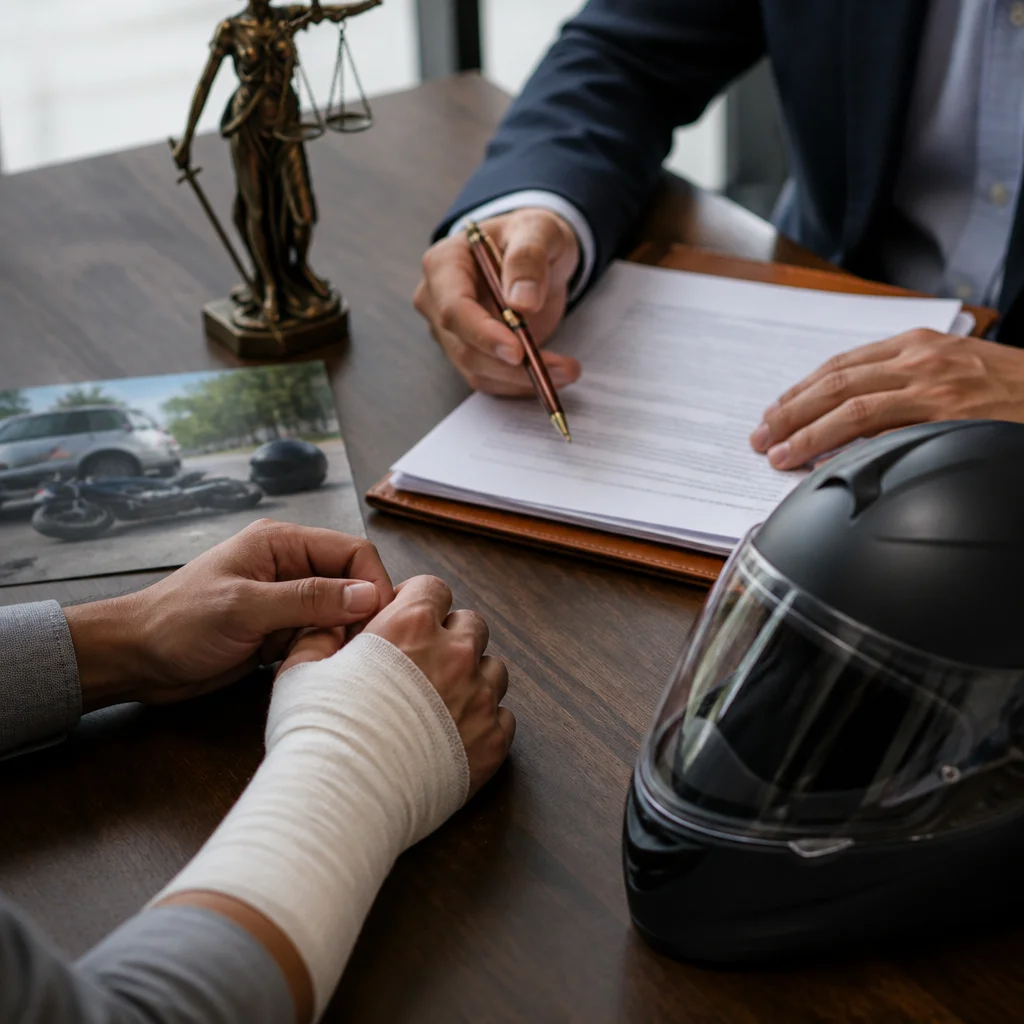
Your next step: Don’t speak directly with the at-fault driver’s insurance company without legal counsel present. Anything you say can be used to reduce your settlement.
The Critical First Steps to Protect Your Case
Time is limited — act now. The decisions you make in the first days and weeks after your accident directly affect how much compensation you ultimately receive.
Immediate priorities:
- Get medical care immediately, even if injuries seem minor. Some injuries appear days later, and medical records create the documentation insurers need.
- Document the accident scene: take photos of your motorcycle, the other vehicle, road conditions, traffic signals, and any visible injuries.
- Collect witness contact information and ask them to describe what they saw.
- File a police report if you haven’t already; the report number becomes part of your evidence file.
- Preserve physical evidence: your motorcycle, helmet, gear, and any objects from the accident scene.
- Keep detailed records of all medical appointments, expenses, and time lost from work.
Don’t delay contacting an attorney. California’s statute of limitations limits how long you have to file a personal injury claim. For most motorcycle accidents, you have two years from the date of injury, but acting sooner strengthens your case.
Your next step: Contact us within the first week of your accident. Early investigation and evidence preservation significantly increase settlement value.
Our Approach to Building a Strong Motorcycle Injury Claim
We pursue full and fair compensation through a systematic investigation and presentation strategy. Here’s how we work:
First, we conduct a thorough case evaluation. We review police reports, medical records, insurance information, and witness statements to establish liability clearly. We investigate all available evidence, including traffic camera footage (which can be decisive), cell phone records showing distracted driving, and expert analysis of vehicle damage.
Second, we quantify your damages precisely. We work with medical professionals to document current injuries and project future medical needs. We calculate lost wages based on your actual income and lost earning capacity if your injuries affect your ability to work long-term.
Third, we build a narrative. Insurance companies respond to clear, well-documented stories about what happened and why their insured party is liable. We present the facts methodically, supported by evidence, to show exactly how much compensation is fair.
We maintain transparent communication throughout. You’ll understand where your case stands, what evidence we’re gathering, and what we expect at each stage.
Your next step: Share your complete accident account with us, including details you think might seem insignificant. Context often matters more than you realize.
Calculating Your Full Compensation Potential
Many injured riders accept settlements that cover only immediate medical bills and a few weeks of lost wages. This leaves long-term expenses uncovered.
We calculate compensation across several categories:
Economic damages (measurable costs):
- All medical bills, emergency care, surgery, hospitalization, and ongoing treatment
- Physical therapy and rehabilitation
- Medications and medical equipment
- Lost wages from time away from work
- Loss of earning capacity if your injuries prevent you from returning to your previous job
Non-economic damages (harder to quantify but equally real):
- Pain and suffering during recovery
- Permanent scarring, disfigurement, or disability
- Emotional distress and anxiety
- Loss of enjoyment of life (if injuries prevent activities you once enjoyed)
California doesn’t cap non-economic damages in most personal injury cases, meaning severe injuries can command substantial compensation for pain and suffering. We work with medical experts and economic specialists to document these losses professionally.

Your next step: Maintain a detailed injury journal noting pain levels, limitations, and how your injuries affect daily life. This becomes powerful evidence for non-economic damages.
Why the Statute of Limitations Matters for Your Case
The statute of limitations is the filing deadline. For personal injury claims in California, you generally have two years from the date of injury to file a lawsuit. After that deadline, your claim is barred forever, regardless of its merits.
This deadline is absolute. Courts won’t extend it for any reason, so acting quickly isn’t just strategic, it’s essential. We file within this window to preserve your rights.
The deadline also affects settlement negotiations. Insurance companies know when your statute of limitations expires. As the deadline approaches, they may hold firm on low offers, betting you’ll accept rather than litigate. Conversely, filing a lawsuit early demonstrates we’re serious and willing to litigate, which often motivates better settlement offers.
Beyond the two-year mark, your claim becomes worthless legally, even if new evidence emerges.
Your next step: Don’t delay calling us. We’ll explain your specific deadline based on your accident date and advise when we should file a lawsuit to maximize negotiating leverage.
How We Investigate and Preserve Evidence
We move quickly to preserve evidence before it disappears. Traffic cameras record over their footage after days or weeks. Witnesses relocate. Accident scenes change. Early investigation is critical.
Our investigation process includes:
- Obtaining the police report and any dash cam or security footage
- Interviewing witnesses while their memories are fresh
- Photographing the accident scene, vehicle damage, and any hazardous conditions
- Reviewing medical records to document injury severity
- Analyzing the at-fault driver’s phone records and background for prior incidents
- Consulting accident reconstruction experts if liability is disputed
We also work to understand your rights and recovery process fully, ensuring no stone goes unturned. Evidence shapes settlement value directly: strong evidence commands higher offers.
Your next step: If you haven’t already, photograph your injuries, medical documentation, and any property damage. Send these images to us immediately.
Negotiating with Insurance Companies on Your Behalf
Insurance companies respond to three things: liability, damages, and the threat of litigation. We address all three in negotiation.
We send a detailed demand letter that establishes liability clearly using police reports, witness statements, and evidence. We quantify damages comprehensively, showing medical bills, lost wages, and the value of pain and suffering. We make clear we’re prepared to litigate if the offer doesn’t reflect fair value.
Insurance adjusters have settlement authority up to certain limits. If our demand exceeds their authority, they escalate to supervisors. We negotiate strategically across multiple rounds, often securing significantly higher offers than initial figures.
Settlement negotiations typically take weeks to months, depending on case complexity. We keep you informed at every step and advise whether to accept offers or continue negotiating. Our expert strategies for negotiating with insurance companies are proven to maximize recovery.
Your next step: Accept that negotiation takes time. Early pressure to settle usually means the offer is too low. Trust our judgment on timing.
Preparing for Litigation if Settlement Negotiations Fail
Not every case settles. If insurance companies refuse fair offers, we litigate confidently. Litigation isn’t a failure, it’s leverage, and sometimes it’s the only path to genuine compensation.

The litigation process includes discovery, where both sides exchange documents and take depositions (recorded statements). We’ll prepare you thoroughly for any deposition. Pre-trial motions narrow issues for trial. Most cases settle during or just before trial when defendants realize juries will award more than the settlement table offers.
Trial preparation is intensive. We work with experts to explain complex injuries and liability to juries. We prepare witnesses and organize evidence for clear presentation. We’re ready to litigate, and defendants’ attorneys know it.
Your next step: Understand that litigation extends your timeline but often dramatically increases your recovery. We’ll advise whether trial is likely to be necessary in your specific case.
What to Expect When Working with Our Firm
We operate on a contingency fee basis: no fee unless we recover for you. This aligns our interests with yours. We only profit if you win, so we pursue maximum compensation relentlessly.
Working with us means:
- A dedicated attorney managing your case personally, not junior staff
- Regular updates on progress and evidence gathered
- Honest assessment of case strengths and settlement potential
- Transparent fee agreements with no hidden costs
- Access to a team of investigators, medical experts, and specialists
You can focus on recovery while we handle legal strategy. We’ll manage communication with insurers so you don’t have to. We’ll gather evidence and build your case professionally.
Your next step: Schedule your free consultation today. We’ll review your accident, explain your rights, and advise on next steps.
Contact Us for Your Free Consultation Today
You have rights after a motorcycle accident. We will investigate all available evidence and pursue full and fair compensation on your behalf.
Time is limited — act now. Don’t navigate insurance claims alone or accept early lowball offers. Contact Weinberger Law Firm for a free, confidential consultation.
Call us or fill out our online form to discuss your case. We’re based in Sacramento and serve all of California. We understand motorcycle injuries, we know how insurers think, and we’re ready to fight for you.
No fee unless we recover for you.
Contact us today for a Free Case Consultation!
Frequently Asked Questions (FAQ)
What should I do immediately after a motorcycle accident in California?
Your first priority is safety and medical care. After securing medical attention, preserve any evidence by taking photos of the accident scene, your injuries, and vehicle damage, and gathering contact information from witnesses. Contact us as soon as possible so we can guide you through protecting your case and understanding your rights before the statute of limitations expires.
How do we handle negotiations with insurance companies on your behalf?
We manage all communication with insurers to prevent them from minimizing your claim. We document your medical bills, lost wages, and other damages while presenting evidence that establishes the other party’s liability. Our goal is securing full and fair compensation without requiring you to go to trial, though we prepare for litigation if the insurer refuses a reasonable settlement.
What compensation can we pursue for your motorcycle injury claim?
We calculate damages based on your specific losses, including medical expenses, ongoing treatment costs, lost income, pain and suffering, and any permanent disabilities. We investigate all available evidence to build the strongest case for maximum recovery. Contact us for a free consultation to discuss your situation and potential compensation.