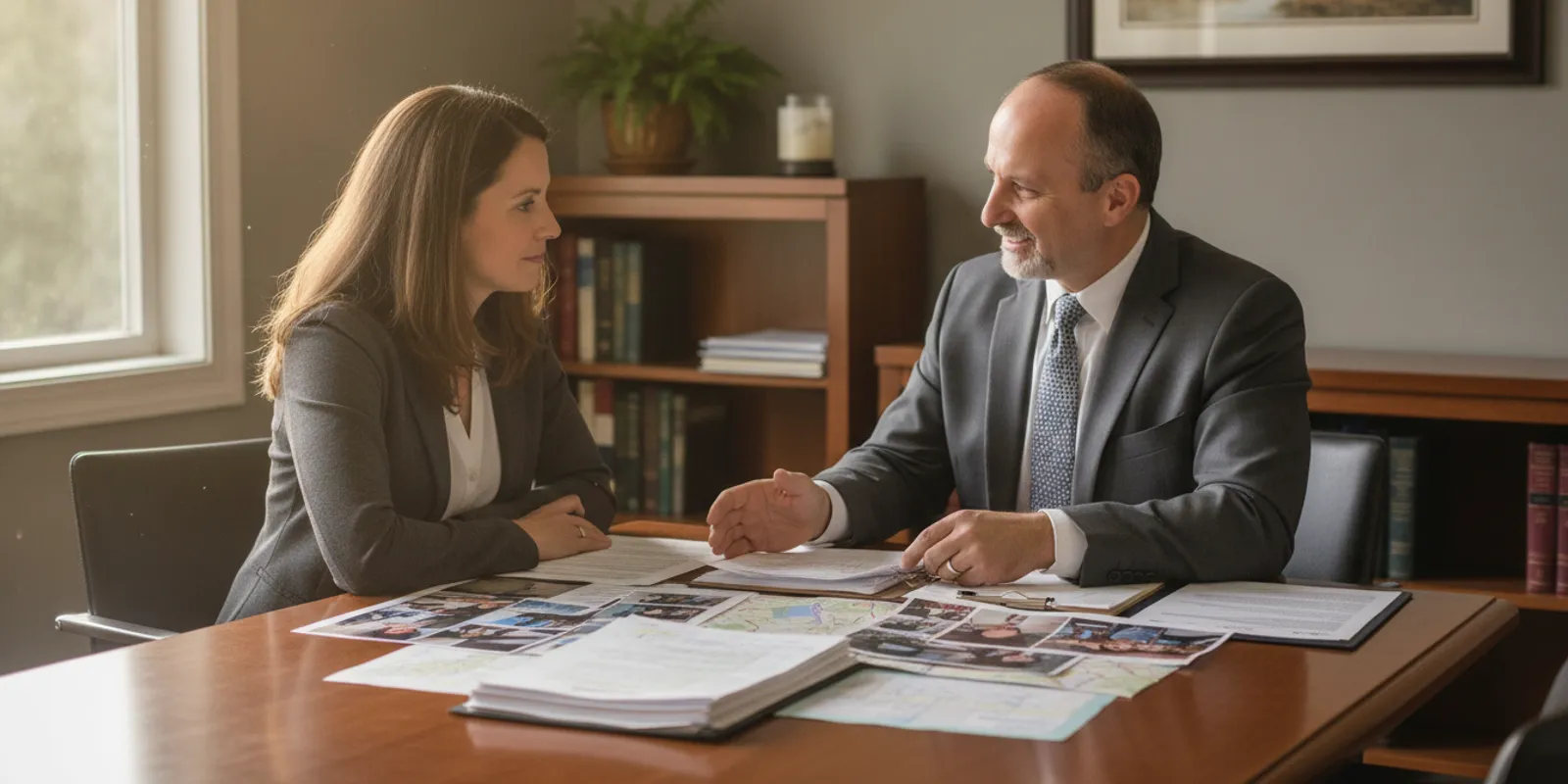
A serious truck crash can leave you sorting out medical care, missed work, vehicle damage, and questions from insurers at the same time. If you are looking for a California truck accident lawyer, first understand what may need attention: your health, time-sensitive records, and the facts that could explain how the collision happened. A careful review can help you decide what to do next without guessing about fault or rushing into a decision.
Call Weinberger Law Firm at 916-357-6767 to request a free consultation.
What should you understand before you take action?
A commercial-truck collision may involve more records and more potential participants than a typical two-car crash. The driver, the company that employs or dispatches the driver, a vehicle owner, a maintenance provider, or another business may be relevant, depending on the evidence. Their names or logos alone do not establish responsibility. The important question is whether evidence connects a particular person’s or business’s conduct to the collision and the resulting harm.
There may also be more than one source of information. A police report can help establish basic details, but it may not answer every question about vehicle movement, visibility, loading, maintenance, or communications before the crash. Relevant material could include photographs, witness accounts, electronic vehicle information, inspection records, dispatch messages, cargo documents, and repair records. Some of that information may be controlled by a company rather than by you.
Do not assume you must solve every issue yourself before asking for help. Your immediate role is to get appropriate care, keep what you already have, and make a clear record of what you remember. A lawyer can help identify which unanswered questions call for further investigation. For background about the variety of work and labor issues within California trucking, UC Berkeley’s Labor Center discusses agricultural truck-driver supply; that subject is context only and does not explain the cause of an individual crash or determine liability. Read the Labor Center’s discussion of California agricultural truck drivers.
What should you do in the first days after a truck crash?
Your health comes first. Follow medical guidance and seek prompt care for symptoms that concern you, even if they were not obvious at the scene. When speaking with a healthcare provider, explain when the collision happened and describe the symptoms you have noticed. Keep visit summaries, discharge instructions, referrals, prescriptions, and bills together. If your symptoms or treatment change, add a dated note rather than relying on memory later.
When you are able, make a short account of what you remember. Do not fill gaps with assumptions. Record the date, approximate time, roadway or intersection, direction of travel, weather and lighting, traffic conditions, and what you observed just before and after impact. Mark which details you saw yourself and which you learned from someone else. If your recollection changes as you recover, add a new dated note rather than silently rewriting the first one.
- Save original photographs and videos of vehicles, the roadway, debris, visible injuries, signs, and signals.
- Write down names and contact information for witnesses, if you have them, without suggesting what they should say.
- Save the police or incident report number and the names of responding agencies or officers, if known.
- Keep receipts and records for care, prescriptions, transportation, and other expenses connected to the crash.
- Preserve damaged personal items and document them before repair, disposal, or replacement when practical.
- Keep insurer letters, emails, text messages, and notes from phone calls in one place.
Do not put yourself in danger to take a photograph or retrieve an item. If a vehicle needs to be moved or repaired, safety and practical needs come first; document its condition before work begins if that is feasible. Avoid posting detailed commentary about the collision, your injuries, or conversations with insurers online. A short post can be separated from its context, and you do not need to share private details publicly to keep your own record.
Which evidence can help answer different questions?
Think of evidence as a set of pieces that may address different parts of a claim, not as one document that proves everything. A photograph may show damage but not establish how the impact occurred. A medical record may document treatment but not explain who caused the collision. The useful approach is to preserve several kinds of information and leave room for a fuller review.
| Record or information | What it may help clarify | Practical way to handle it |
|---|---|---|
| Scene photos and video | Vehicle positions, visible damage, road layout, sight lines, and conditions | Keep the original files; note the date, location, and photographer if known. |
| Witness details | What nearby people observed before or after impact | Save names and contact details; do not coach or pressure anyone. |
| Medical and treatment records | Reported symptoms, care received, referrals, and recovery over time | Keep visit summaries and instructions together, and track follow-up appointments. |
| Work and income records | Time missed, schedule changes, or work restrictions, where applicable | Save schedules, pay records, and employer communications rather than estimating later. |
| Truck, company, or maintenance records | Vehicle condition, operation, dispatch, loading, or maintenance if relevant | Ask a lawyer promptly whether particular records should be identified for preservation. |
| Insurance communications | What was reported, requested, or offered and when | Keep the complete message and note the date, caller, company, and any stated deadline. |
A simple filing system makes the material easier to use. Create folders labeled medical care, crash evidence, work and expenses, and insurance. Use descriptive filenames such as “intersection-photo-eastbound-date” rather than a string of numbers. Preserve the unedited original of each image or recording; if you need to crop or mark a copy for your own reference, keep the original unchanged. A brief timeline can also identify missing information, such as a witness whose name you have but whose contact details you still need.
Who may be responsible for a commercial truck collision?
There is no single answer for every crash. A driver’s actions may need review if, for example, the truck changed lanes, turned, stopped, or approached traffic in a way that others dispute. A company may be relevant if evidence connects its decisions or conduct to the event. A maintenance contractor, cargo-related business, vehicle owner, or another road user could also be examined when the facts point to a role. These possibilities are questions to investigate, not conclusions about any particular crash.
Start with the events, not assumptions about a company name or vehicle type. What did each vehicle do? Where did the impact occur? What could the driver see? Were there witnesses or recordings? What documents could explain the truck’s condition or trip? A lawyer can compare the accounts with available records and assess whether a particular person or business belongs in the investigation. The evidence must support any claim of responsibility.
Some collisions involve disputed or shared responsibility. One person may describe a lane change while another recalls the truck already occupying the lane. A witness may have seen only the moment of impact, not the seconds before it. A useful investigation tests the different accounts against physical evidence, timing, vehicle damage, and other reliable information where available. A truck accident resource for Colfax offers related information; the circumstances of each collision still need individual review.
How should you handle calls and requests from insurers?
You may hear from more than one insurer. One may handle coverage for the truck or company, while another may insure your own vehicle. Give accurate basic information, but do not guess about speed, distance, fault, or the full extent of an injury when you do not know. It is reasonable to say that you need to check your records or that you do not remember. Keep a note of what you were asked and what you said.
If someone requests a recorded statement, an authorization, or a signed release, pause long enough to understand the request. Ask what information the document permits someone to obtain, what time period it covers, and what the release would resolve. Consider getting legal guidance before making detailed statements or signing documents that could affect your options. This does not mean every request is improper; it means you should know what you are agreeing to.
Do not treat an early offer as a complete measure of a claim. The amount and timing of any proposed resolution depend on the circumstances, and treatment needs may still be developing. Before signing, understand what claims are included and whether the document ends them. A lawyer can review the proposed terms and explain what questions remain, without promising a particular result.
Keep an insurer-contact log with the date, caller’s name, company, questions asked, documents requested, and any deadline mentioned. Save envelopes and complete emails, not only screenshots of one paragraph. If a deadline is provided, note it and ask what it refers to rather than assuming it is a court deadline or a final opportunity to act. This organized record can prevent confusion when several companies contact you.
How can you document the effect of your injuries?
In addition to records about the collision, keep a straightforward account of how the injuries affect treatment, work, and ordinary routines. You do not need to create a dramatic description or make predictions. Record what changed, when it changed, and what information supports it. A dated note can be as simple as identifying a medical appointment, a work shift you missed, or a task you needed help to complete.
Keep medical documents in sequence, including visit summaries, referrals, prescriptions, and instructions for follow-up. If a provider gives work restrictions, save the written instructions and any related communication with your employer. If you miss time or change duties, preserve schedules, pay statements, and messages showing the dates. These records can be more useful than trying to reconstruct a calendar of missed work months later.
Also keep receipts for reasonable expenses connected to care or transportation, and label them with the date and purpose. If you do not yet know whether an expense matters, keep the receipt rather than deciding on your own that it is irrelevant. Avoid estimating totals from memory where the underlying records are available. The goal is a clear, factual record that can be reviewed alongside the medical information and other evidence.
What should you ask before choosing a lawyer?
A first conversation should help you understand how the lawyer would approach your circumstances. You do not need to know legal terminology or have every document ready. Share what you know, identify what remains uncertain, and ask direct questions. You are evaluating the proposed working relationship as well as discussing the collision.
- Who will handle my matter? Ask whether you will speak directly with the attorney and who else may contact you about day-to-day updates.
- What would you investigate first? A useful answer should respond to the facts you describe, including any records or witnesses that may be time-sensitive.
- What should I preserve now? Ask about photos, vehicle condition, work records, and whether company-held information may require a prompt preservation request.
- How do fees and case costs work? Ask what the written agreement says about fees, expenses advanced, reimbursement, and what happens if there is no recovery.
- How will we communicate? Clarify whom to contact, how urgent questions are handled, and how you can expect to receive updates.
- What is still unknown? Ask the lawyer to distinguish what is established from what depends on further investigation.
- What decision do I need to make now? Ask whether a particular action is time-sensitive and what can wait until you have more information.
Listen for a clear explanation that respects uncertainty. A careful lawyer should not claim to know the outcome before reviewing the facts. You can ask for the fee terms in writing and take time to read them. A consultation is an opportunity to discuss the situation and ask questions; contacting a firm does not, by itself, create an attorney-client relationship.
Weinberger Law Firm represents people injured in California accidents. Joseph B. Weinberger has 38 years of California personal-injury experience, and the firm describes its approach as involving direct attorney participation. The firm offers a free initial consultation. Its contingency-fee arrangement means clients pay nothing upfront and pay a fee only if the firm recovers compensation. Review the written agreement to understand the fee and how case expenses are handled before deciding whether to proceed.
Why can timing matter for records and deadlines?
Two kinds of timing deserve attention: preserving evidence and meeting legal deadlines. A vehicle may be repaired, electronic information may no longer be available, or a witness may become harder to locate. That does not mean every record will disappear or that every case requires the same step. It does mean you should ask early whether a specific item is important and who controls it.
Legal deadlines depend on the type of claim and the parties involved. A claim involving a public entity may have claim-presentment requirements that differ from a claim against a private party. Do not use a general article or a date remembered from a conversation to calculate your deadline. If a government vehicle, public agency, or public roadway issue may be involved, raise it promptly with a lawyer so the rules for your situation can be checked.
Keep the crash date and any official correspondence easy to find. If you have already received a notice or claim form, preserve the entire document and its envelope, and record when it arrived. Do not assume that an insurer’s internal deadline is the same as a legal filing deadline. A lawyer can help identify what deadline applies and what information is needed to assess it.
How can you prepare for a useful consultation?
You can prepare a one-page summary rather than trying to assemble a perfect case file. Include when and where the crash happened, the vehicles involved, what you remember, the care you have received, any work disruption, and each insurer or business that has contacted you. Make a separate list of questions and uncertainties. This helps keep the conversation focused while leaving space for details you may not know yet.
- Bring or identify the report number, photographs, and witness information you have.
- Bring recent medical summaries and bills if readily available, but do not delay a conversation just because records are missing.
- Bring insurer letters, proposed forms, and a short log of calls or messages.
- Write down the truck or company name and any identifying details you noticed, without assuming those details establish fault.
- Note practical concerns, such as transportation to appointments or a request to return to work, so the lawyer understands what is affecting you.
For a person in the firm’s Northern California service area, a California personal-injury resource provides broader background about injury claims. Weinberger Law Firm serves clients across California, with a local emphasis that includes Roseville, Sacramento, and Folsom. A conversation can help identify questions to investigate, but it is not a substitute for medical care or a review of the specific facts and applicable deadlines.
It may be useful to request legal guidance when injuries require continued care, responsibility is disputed, several vehicles or businesses were involved, an insurer is asking for a recorded statement or release, or important records may be controlled by a company. You may also choose to ask questions simply because you are unsure what information matters. You do not have to arrive with a conclusion about who is at fault.
Call 916-357-6767 to discuss a free consultation with Weinberger Law Firm.
Frequently Asked Questions
Should I speak with the truck company’s insurer?
You may be asked for basic information, but answer accurately and do not speculate. Keep a record of the conversation, and understand any document before signing it. If you are asked for a recorded statement, broad medical authorization, or release, consider obtaining legal guidance before responding in detail.
Does a trucking company automatically become responsible for a crash?
No. A company’s role depends on evidence about its relationship to the driver, vehicle, and events, as well as the conduct connected to the collision. An investigation should establish that connection rather than rely only on a company name printed on a truck.
What if I do not have electronic truck data or maintenance records?
Those materials may be held by other parties. Preserve the information you do have, such as photos, report details, medical records, and correspondence. Ask a lawyer whether particular company-held records should be identified and preserved.
Should I wait until treatment is finished before speaking with a lawyer?
You do not need to wait until you have every medical record or know the full course of recovery to ask questions. A prompt conversation may help identify evidence or deadlines to check. Continue following medical guidance, and avoid treating an early discussion as a final assessment of your injuries or claim.
Does a free consultation mean I have hired the firm?
No. An inquiry or consultation alone does not create an attorney-client relationship. Representation begins only if you and the firm agree to proceed and complete the required engagement arrangements.
After a truck crash, focus on care, careful recordkeeping, and understanding what remains uncertain. A measured review of the evidence and the available choices can help you make an informed decision about your next step.