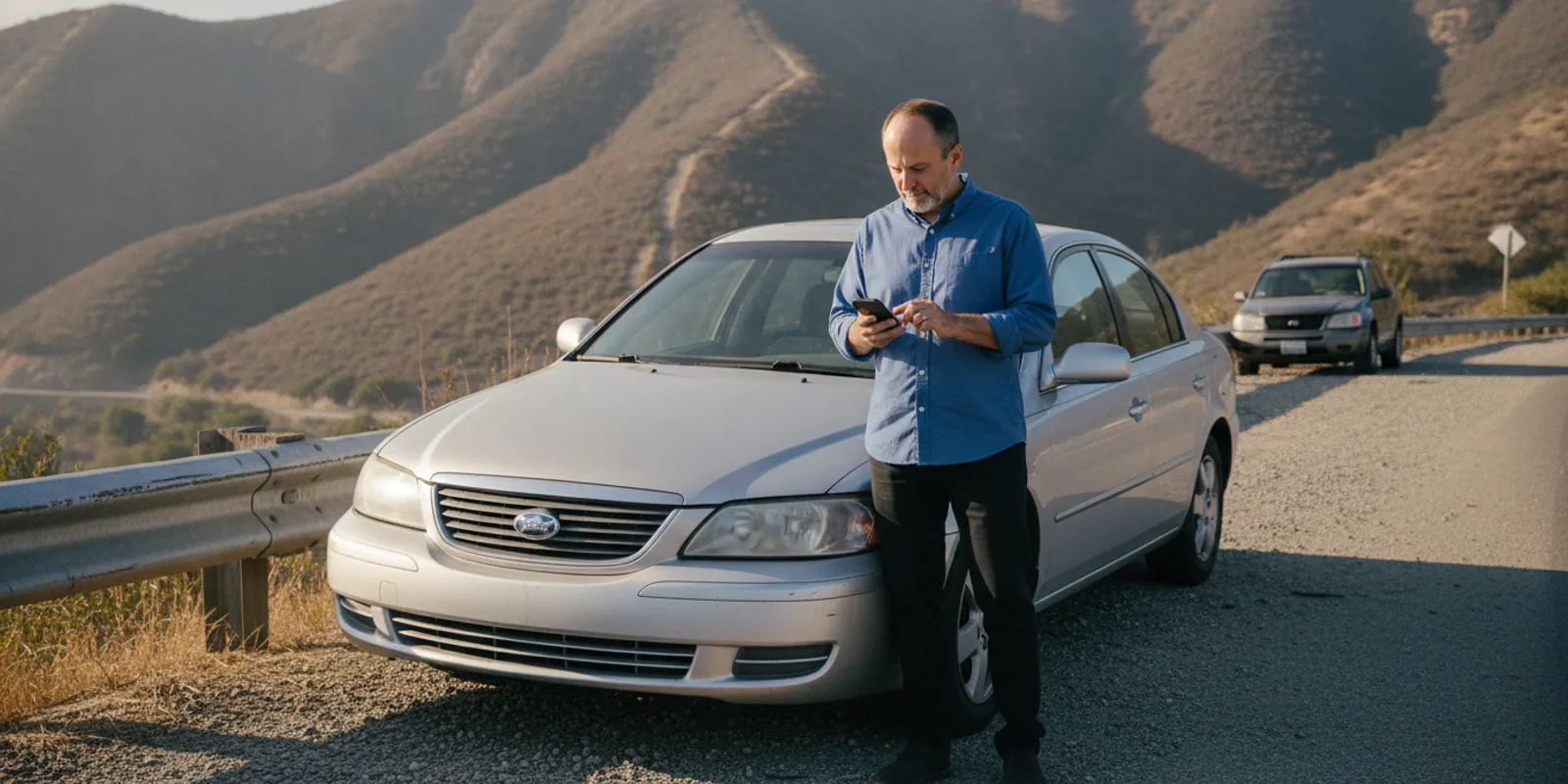
A collision can leave you shaken, unsure what to say, and worried about what comes next. Knowing what to do after a car accident in California can help you focus on safety, medical care, and the records that may matter later. The right next steps depend on the people involved, the damage, and whether anyone is hurt. You do not need to solve every insurance or legal question at the roadside; start with immediate needs, then work through the details in order.
Call Weinberger Law Firm at 916-357-6767.
What should you do first at the scene?
Start with safety, not paperwork. If you can do so without creating another hazard, move away from active traffic and turn on hazard lights. Check whether anyone appears to need urgent help. Call 911 when someone is injured, a traffic hazard needs attention, or emergency response is appropriate. Do not move a seriously injured person unless there is an immediate danger, such as fire or approaching traffic.
If the vehicles can be moved safely, follow directions from law enforcement or emergency responders. Stay at the scene and exchange information with the other driver. Keep the conversation brief and factual. You can express concern for someone without deciding who caused the collision. Avoid arguing, guessing about speeds or distances, or making a definitive statement about fault before you have had time to understand what happened.
If another driver leaves, do not chase them. Note what you can safely observe, such as the vehicle description, direction of travel, and any part of a license plate you remember, and report the hit-and-run promptly. Do not put yourself in danger to get a better look or photograph.
Ask how to obtain the incident or report number and which agency responded. Reporting requirements can depend on the circumstances, so cooperate with the responding agency and follow its instructions. If an officer does not come to the scene, make your own accurate record and ask the appropriate agency how to report the collision.
Which details are worth recording?
Once it is safe, preserve what you can while the scene is still fresh. Do not step into traffic, delay medical care, or confront anyone to gather evidence. A few clear photographs and a short set of notes are often more useful than trying to reconstruct every detail later.
- Photograph the location: Take wide views of the roadway, vehicle positions, lane markings, traffic controls, and nearby signs. Add closer images of visible damage and hazards. If lighting or weather affected visibility, note that in writing.
- Exchange information: Record names and contact details, driver and vehicle information, and insurance information. If there are witnesses, ask for their names and a way to reach them. Do not pressure anyone to agree with your account.
- Write a first-person account: Note the date, approximate time, location, direction of travel, what you remember seeing before impact, and what happened afterward. Separate what you personally observed from what another person told you.
- Keep report details: Write down the responding agency and any officer identification or report number provided. Ask how and when a copy may be requested.
- Preserve original files: Keep original photos and messages. If you mark up an image or add notes, save a separate copy so the original remains unchanged.
For example, “the other car was going too fast” is a conclusion unless you actually know its speed. A more careful note might say, “I saw the car enter the intersection; I did not see it slow before impact.” The second version records what you remember without turning an estimate into a fact. You can add a dated note later if you recall another detail; keep the earlier account instead of silently replacing it.
Make a short timeline over the next several days. Add when you sought care, spoke with an insurer, received a repair estimate, missed work, or noticed a new concern. Note who you spoke with and what they asked you to do. A simple dated record helps you find gaps, follow up on requests, and explain how events unfolded.
When should you seek medical care?
Seek emergency care for urgent symptoms or serious injuries. For other concerns, contact a medical professional promptly and describe the collision and your symptoms. Pain, stiffness, dizziness, or other problems may become noticeable after the initial shock has passed. A clinician can assess your situation and advise you about care. Do not rely on an insurer, a search result, or this article to diagnose an injury.
Follow the instructions you receive and keep copies of visit summaries, bills, referrals, prescriptions, and work restrictions. Tell your provider when a symptom began and how it affects daily activities. If symptoms change, report that to the provider. A treatment record can help establish what care you sought and when; it does not, by itself, determine who was legally responsible for the collision.
Do not delay necessary care just because you are unsure how it will be paid. Ask the provider or your health insurer about billing and coverage questions, and save the responses. If cost, transportation, scheduling, or another issue makes a recommended appointment difficult, contact the provider to ask about options and document the conversation. If you miss an appointment, note why and ask the provider what to do next.
How should you handle the first insurance calls?
You may need to notify your own insurer, and the other driver’s insurer may contact you. Review your policy and follow its reporting requirements. Give accurate basic facts, such as where and when the crash occurred. If you do not know an answer, say so rather than estimating. Record the adjuster’s name, company, contact information, claim number, and the date of each call.
An adjuster may ask for a recorded statement, a medical authorization, or a signed document. Before agreeing, make sure you understand what is being requested, what information it covers, and how it may be used. You can ask for a request in writing and take time to review it. An early statement may not reflect symptoms or details that become clearer later. Avoid speculating about fault, future recovery, or the complete extent of losses while treatment and investigation are ongoing.
Keep copies of letters, emails, forms, estimates, and texts. After a phone call, write a brief note with the date, topics discussed, and promised follow-up. The California Department of Insurance describes claim-handling steps, including acknowledging a claim, beginning an investigation, and providing forms and instructions. Its consumer guide to what to do after an accident is a useful reference for the insurance process. An insurer’s process is not a final decision about legal responsibility, and individual claims may involve different facts and requests.
Keep your communications consistent and truthful. If you learn that something you said was inaccurate, do not try to cover it up; make a note of the correction and ask how to provide accurate information. Do not sign a document simply because it arrives with a short deadline printed on it. Read what it covers, ask questions, and keep a copy of anything you return.
How can you organize expenses, work, and vehicle records?
Set up one paper or digital folder for the collision. Create subfolders by topic or use file names that begin with the date, such as “2026-11-08 clinic visit.” Keep originals when possible and make a secure backup. This small system helps you locate a bill or request without relying on memory when several things are happening at once.
| Record group | Examples to keep | What it can help clarify |
|---|---|---|
| Medical care | Visit summaries, bills, prescriptions, referrals, provider instructions | What care you received and when |
| Work and income | Schedules, pay records, employer messages, written work restrictions | Dates missed or changes to duties and hours |
| Vehicle and travel | Tow, storage, repair, rental, and transportation receipts | Costs and steps related to the vehicle and travel |
| Insurance communication | Claim numbers, letters, emails, call notes, and forms | Requests, responses, and follow-up dates |
| Scene and witnesses | Original photos, witness contacts, report details, dated notes | Information that may be harder to reconstruct later |
For missed work, record the dates and hours, the duties you could not perform, and any schedule or pay change. Ask your employer what records can confirm those details. If you used sick or vacation time, note that too. Save receipts for expenses you paid yourself, but do not assume every cost will automatically be reimbursed.
Before authorizing repairs or disposing of damaged property, take reasonable photographs and check whether an insurer or another involved party needs an opportunity to inspect it. Keep estimates and invoices together. If there is a disagreement about damage, write down who inspected the vehicle and what was said. Do not put off needed repairs just to keep an item untouched; ask what documentation is appropriate and keep a record of the answer.
A practical file can also include a one-page index: collision date, report number, claim numbers, key contacts, upcoming appointments, and pending requests. Update it as you receive new information. If another family member helps manage calls or records, agree on where the current file is stored so messages and deadlines are not missed.
What can affect responsibility for a California collision?
Responsibility is not always as simple as one driver being entirely at fault. The sequence of events, traffic controls, visibility, vehicle position, witness accounts, physical evidence, and each person’s conduct may matter. More than one person can share responsibility. An insurer’s early view reflects the information available at that point; it may change when additional records or evidence are reviewed.
Preserve information without trying to conduct a full investigation yourself. Do not access another person’s accounts or property, pressure a witness, or post accusations online. If a nearby business or residence may have camera footage, note its location and the approximate time of the collision. Video may not be kept indefinitely. An attorney can help consider appropriate ways to request relevant material, but do not trespass or demand access yourself.
California applies comparative-fault principles, but how they apply depends on the facts and the claim. Avoid accepting a percentage or making a definitive statement about your responsibility before you understand the available information. At the same time, do not misrepresent what happened. A careful, consistent account is more useful than a confident guess.
If several vehicles were involved, write down where each one was before and after impact as best you remember, and identify what you saw directly. If weather, road work, a traffic signal, or a commercial vehicle may have played a part, note the detail without deciding on your own that it proves fault. These observations can help guide later questions without substituting assumption for investigation.
What should you consider before accepting an insurance offer?
A quick offer may seem helpful when bills are arriving, but read the entire document before accepting or signing a release. Ask what the offer covers: vehicle damage, injury-related claims, or both. Find out whether it is final and what rights the release would end. If wording is unclear, request an explanation in writing and take time to review it.
Before deciding, consider whether your medical evaluation or treatment is still underway, whether a provider has discussed future care, and whether you have documented the losses you already know about. An early offer may not account for information that has not yet been gathered. You can seek legal advice about a release before signing. Do not assume an offer must be accepted just because an adjuster describes it as available for a limited time.
There is no single amount or outcome that applies to every collision. Injury, available evidence, insurance coverage, responsibility disputes, and the terms of a proposed release can differ. Comparing your situation with a headline or another person’s result may leave out important facts. Focus on what the actual documents say and which questions remain unanswered.
How do deadlines affect the next steps?
Do not assume there is unlimited time to act. Legal deadlines depend on the kind of claim, the parties involved, and the facts. A claim involving a public entity can have different and shorter procedures than a claim against a private driver. Insurance notice requirements may also be separate from court filing deadlines. Missing an applicable deadline can affect available options, so identify important dates early and confirm which rules apply rather than relying on a general online article.
Put the collision date, insurer response dates, scheduled appointments, and expected record requests on a calendar. If you receive a denial, a settlement document, or a request with a deadline, save the entire document and record when it arrived. If a public vehicle, road condition, or government entity may be involved, raise that fact promptly with a qualified California attorney so the specific process can be checked. A general article cannot tell you which deadline governs your individual circumstances.
When you speak with counsel, bring the timeline, report details, insurance correspondence, medical records you have, and any proposed release. The firm can discuss whether it may be able to help; contacting a firm or submitting information does not guarantee it will accept a matter or create an attorney-client relationship. Representation begins only if the firm agrees to take the matter and the appropriate agreement is completed.
How can you prepare for a useful legal consultation?
You do not need a perfect file before asking questions. A few organized details make an initial conversation more productive: when and where the collision occurred, who was involved, whether you received medical care, what the insurers have requested, and what remains uncertain. Bring or have ready the report number, claim correspondence, photographs, and any time-sensitive document.
It can help to write down your questions beforehand. For example: “What does this release cover?” “Does a public entity appear to be involved?” “Which records should I keep?” “What deadline should I verify?” An attorney may need more information before answering. A thoughtful consultation focuses on your circumstances and what needs to be checked, not on a guaranteed result.
Weinberger Law Firm represents injured people in California, with a local focus that includes Roseville, Sacramento, and Folsom. You can read the firm’s car-accident service information and its personal-injury representation information as general background. Weinberger Law Firm offers free consultations and works on a contingency-fee basis: clients pay nothing upfront and only pay if the firm recovers compensation. The details of any representation are discussed directly with the firm.
Call Weinberger Law Firm at 916-357-6767 to discuss your questions.
Frequently Asked Questions
Do I have to call the police after every California car accident?
Reporting steps can depend on the circumstances, including injury, damage, and the situation at the scene. Contact law enforcement when someone is injured, a hazard needs attention, or emergency response is appropriate, and follow the instructions given. If no officer comes, keep an accurate record and ask the appropriate agency how to report the collision.
What if I feel fine at the scene but notice pain later?
Contact a medical professional and explain when the symptoms began and that you were in a collision. Follow the provider’s recommendations and keep records of your care. A later symptom does not by itself determine its cause or resolve questions about responsibility.
Should I give the other driver’s insurer a recorded statement?
Before agreeing, understand what is being requested and how the statement may be used. You can ask for the request in writing, review it, and seek legal advice if you are unsure. If you do provide information, be accurate and avoid guessing about facts you do not know.
Should I sign a settlement release if I need money for bills?
Read the whole release and confirm which claims it resolves and whether it is final. Consider what information is still unknown, including ongoing medical evaluation or undocumented losses. You can ask for time to review the document and consult an attorney before deciding.
How can you make the next step manageable?
Put safety and medical care first, preserve your original notes and photographs, keep a dated record, and read insurer documents before signing. If the collision caused an injury or you are uncertain about a request or deadline, consider speaking with a California personal injury attorney. A calm, organized approach can help you understand what needs attention next without forcing you to decide every issue at once.