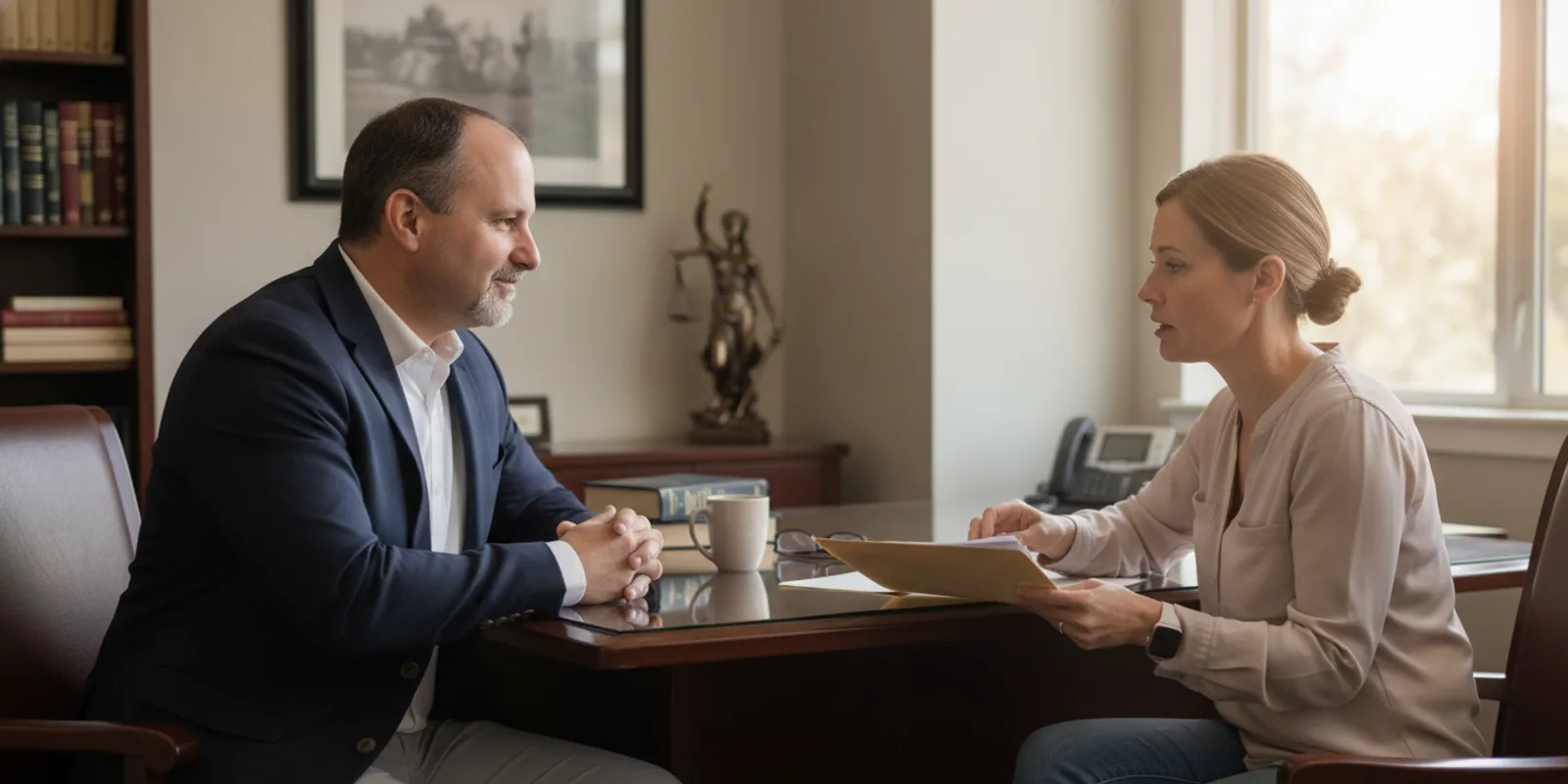
After a collision, choosing an auto accident lawyer in Sacramento can feel like one more task amid medical appointments, vehicle repairs, and insurance calls. A first conversation should help you understand who may handle your matter, what information might be useful, and what questions remain. It should not pressure you to decide before you are ready.
Call Weinberger Law Firm at 916-357-6767.
What should an initial conversation help you understand?
The first conversation is a chance to explain the situation and learn how the attorney approaches the next steps. You can describe when and where the crash happened, what you remember about the sequence of events, what injuries or symptoms you have noticed, and what contact you have received from insurers. You do not need a complete case file to start asking questions.
A preliminary discussion is not a final decision about fault, the value of a claim, or what evidence may ultimately show. The lawyer may identify information that would help clarify the picture, but it is reasonable to ask what is known now, what remains uncertain, and what the next step would be if you decide to proceed.
Consider whether the answers are understandable and specific to what you described. For example, if you mention that the other driver disputes what happened, the lawyer might explain what kinds of records could help establish the sequence of events. A useful answer recognizes uncertainty rather than promising a particular outcome.
For an overview of the firm’s car-accident work, see its car accident legal guidance. Use that information to frame questions, not as a substitute for advice about your specific facts.
How can you compare attorneys on practical details?
Experience and legal knowledge matter, but the day-to-day working relationship matters too. Ask who will be your regular contact, whether you will speak directly with the attorney, and how updates are usually shared. You can also ask how to reach the office when a time-sensitive question arises and what response process to expect.
Questions about communication are not minor details. If you prefer a phone call for important updates, say so. If you need information in writing so you can review it later, ask whether that can be accommodated. A clear process can make it easier to follow what is happening when you are already managing treatment, transportation, and work or family responsibilities.
- Who would be directly involved in reviewing and handling the matter?
- Who should I contact with a question about a letter or deadline?
- How are significant decisions explained, and which decisions need my approval?
- What information would you need before discussing possible next steps?
- How can I ask for clarification if I do not understand a legal or insurance term?
Notice whether the attorney listens without rushing through your account. You should be able to correct a misunderstanding, explain that a detail is uncertain, and ask follow-up questions. A calm, plain explanation is more useful than a confident prediction that leaves you unsure about what happens next.
What should you gather before speaking with a lawyer?
Gather what is readily available, but do not postpone a conversation because a report or record is missing. A short timeline and a few key documents can help you explain the crash more clearly. You can tell the lawyer which information you do not have yet.
- The date, approximate time, and location of the collision.
- The names and contact details of drivers, passengers, and witnesses, if known.
- Photographs of the scene, vehicles, visible injuries, traffic controls, or road conditions.
- A police exchange form, incident number, or report details, if available.
- Insurance letters, claim numbers, adjuster contact details, and any requested response dates.
- Medical visit dates, provider information, and a basic record of symptoms or limitations.
- Notes about missed work, transportation difficulties, or other practical effects of the crash.
Keep original documents where you can find them and make copies or secure digital images for reference. Preserve relevant photographs in their original form when possible. Avoid editing an image in a way that changes what it depicts. If a damaged item or vehicle part could matter, ask before discarding it.
You do not have to create a perfect chronology. Start with what you remember and separate what you saw from what another person told you. If your memory of a detail is incomplete, label it as uncertain. That is more helpful than trying to fill in a gap with a guess.
How should you organize the first account of the crash?
A simple timeline can make a complicated conversation easier. Write a few lines in chronological order: where you were going, what happened immediately before impact, what you observed during the collision, and what happened afterward. Include landmarks or nearby intersections if you know them. You do not need to use technical language or decide who was legally responsible.
For example, you might note that you were traveling through an intersection, saw another vehicle enter from a side street, felt an impact on one side of your car, and then spoke with a witness near the corner. Mark which details come from your own memory and which come from a report, passenger, or later conversation. This helps the lawyer distinguish firsthand observations from information that needs confirmation.
Keep a separate list of questions that have come up since the crash. Perhaps an insurer has asked for a recorded statement, a repair shop has requested a decision, or a medical appointment is scheduled. State what the request says and when a response is due. Do not assume that every request has the same purpose or that every stated date is a legal deadline.
How should you handle insurance calls and documents?
An insurer may ask for information, request records, or seek a recorded statement. The appropriate response depends on the circumstances and whose insurer is contacting you. Before responding, ask what the request is for, whether a response date applies, and whether you may review the questions or documents first. If you do not know an answer, say so rather than guessing.
Keep a record of calls, including the date, the name of the person you spoke with, and a short note about what was discussed. Save letters, emails, photographs, and copies of anything you send. If a conversation includes a new request or deadline, write it down and ask for the request in writing if that would help you understand it.
Read a document before signing it. If you receive a settlement offer or release, ask what the document would resolve and whether signing would end some or all of the claim. Do not assume that a payment accounts for every expense or concern, especially when treatment is ongoing or important information is still being gathered. You can ask for time to review an offer and discuss its terms before making a decision.
Medical care comes first when you need it. Follow the directions of your treating providers and keep a basic record of appointments and symptoms. This kind of recordkeeping can help you remember events later; it is not medical advice and does not replace a legal assessment.
Why can deadlines affect the next step?
Legal time limits depend on the facts, the parties involved, and the type of claim. A matter involving a public agency may have notice requirements that differ from those for a claim against a private driver. Do not use a general online timeline to calculate your own deadline. The California Courts Self-Help Center provides general legal information, but a lawyer can help identify which rules may apply to a particular situation.
Bring any letter or email that mentions a response date, and keep the envelope if the date of receipt may matter. Raise possible deadlines early, even if you are still waiting for medical or insurance records. If you are unsure whether a date is important, ask rather than waiting until every document is collected. A deadline should be confirmed for the specific circumstances.
What should a contingency fee agreement explain?
Many personal injury matters are handled under a contingency-fee agreement. The attorney fee is tied to a recovery rather than billed as an upfront hourly fee. Weinberger Law Firm states that clients pay nothing upfront and pay an attorney fee only if the firm recovers compensation. The written agreement controls the terms that apply to a particular representation, so read it carefully before signing.
Ask the attorney to explain the fee percentage and whether the calculation changes if a lawsuit becomes necessary. Also ask how case expenses are handled. An attorney fee and case costs are separate categories. The agreement should describe which expenses may be advanced, how they are accounted for, and when any amount is deducted if there is a recovery.
| Agreement detail | Question to ask | Why to clarify it |
|---|---|---|
| Attorney fee | What percentage applies, and can it change at a later stage? | Shows how the fee is calculated under the written terms. |
| Case expenses | What expenses might arise, and who advances them? | Separates costs from the attorney fee. |
| Final accounting | How are any fee and expenses listed if there is a recovery? | Helps you understand the calculation and deductions. |
| Ending representation | What does the agreement say if either side ends the relationship? | Explains the written terms before you commit. |
Ask for an explanation of any phrase you do not understand. You can take the agreement away to review it and ask follow-up questions. It is reasonable to want a clear explanation of the fee, costs, and responsibilities before signing.
How do evidence and injuries shape a claim review?
The details that matter can vary from one collision to another. A lawyer may need to understand how the crash occurred, what each person involved recalls, what photographs or records exist, and how the injuries have affected you. In some matters, the drivers give different accounts. In others, a witness, roadway feature, or sequence of impacts may need closer examination.
Medical information can also develop over time. An initial visit may document immediate complaints, while later appointments may describe symptoms or limitations that were not clear at first. Keep records you receive and tell your providers about symptoms you are experiencing. Do not change treatment based on a legal conversation; direct medical questions to your treating providers.
A useful review separates established facts from open questions. For instance, a photograph may show damage to a vehicle but not explain the entire sequence of a crash. A report may contain important information, but it may not answer every question about responsibility or injury. Avoid treating a single document or another person’s experience as a prediction of what will happen in your matter.
Weinberger Law Firm describes its work as representing people injured through another party’s negligence. Joseph B. Weinberger has 38 years of California personal-injury experience, and the firm’s approach emphasizes direct attorney involvement. A consultation is an opportunity to discuss whether the facts may fit the firm’s work; contacting the office does not by itself create an attorney-client relationship.
What questions can help you decide without rushing?
Before ending the initial conversation, ask the attorney to summarize what happens next and what you need to decide now, if anything. If the answer depends on a record you do not yet have, ask how to obtain it and whether there is a date by which it matters. This turns a broad discussion into a short, practical list.
You might also ask:
- What do you understand about the crash so far, and what is still unclear?
- Which documents would be most useful to provide first?
- Is there any time-sensitive request I should address or have reviewed?
- What would the firm do next if I decide to move forward?
- How will I receive updates, and whom should I contact with questions?
- Can I review the fee agreement and ask questions before deciding?
After the call, take a few minutes to note the answers in your own words. Compare how each attorney explains the process, who would be involved, and how the fee agreement works. You do not need to choose based on a single confident statement. Look for a clear explanation of both the possible next steps and the facts that remain uncertain.
If you want to learn more about the firm’s broader injury work before making that decision, visit its personal injury lawyer information page. It can help you understand the types of matters the firm describes handling, while your consultation can address the circumstances you share.
How can you describe the practical effects of the crash?
A consultation is easier to follow when you can explain not only what happened on the road, but also what has changed since. You do not need to calculate a dollar amount. Instead, make a plain list of concrete effects: a work shift you missed, a task at home that has become difficult, a ride you need because your vehicle is unavailable, or an appointment that affects your schedule. Note dates when you can, and distinguish an expense you have already paid from one you expect may arise.
Keep receipts and written estimates together, but do not assume that every item will be treated the same way in a claim. A repair estimate, rental-car record, wage document, and medical bill each describe different information. Ask the attorney which records may be relevant and how to submit them. Avoid altering documents or combining expenses in a way that makes the original source unclear.
A short, dated note can also help you remember how symptoms or daily limitations have changed. Keep it factual and private, and share it with your providers when it is relevant to care. If the situation changes, update your notes rather than trying to reconstruct everything months later. This is ordinary organization, not a measure of what a claim is worth.
What may happen after the first conversation?
If you decide to continue speaking with an attorney, the next step may be a request for additional records or a more detailed account. Ask what the office needs first and how to provide it securely. You might be asked for insurance correspondence, photographs, a report number, or records related to treatment. Share copies when possible and keep your own set of what you send.
Clarify whether the attorney needs you to take any action while the information is being reviewed. For example, you may need to preserve a letter, note a response date, or avoid discarding a damaged item. Ask who will contact you if the office needs more information and whether you should follow up if you have not heard back by a particular time. A simple plan helps prevent uncertainty from turning into repeated calls or missed details.
If you choose to hire the firm, review the written agreement and ask how the representation begins. Make sure you understand what work the agreement covers, how communication will work, and what the firm expects you to do. Keep a copy of the signed agreement and save the contact information you are given. If you decide not to proceed, you can still ask what records you should keep and whether any upcoming date needs attention.
Not every question will have an immediate answer. The attorney may need to review records or learn more about the crash before explaining options. It is reasonable to ask what remains unresolved and when you can expect the next update. Clear expectations at this stage can make the process easier to follow without suggesting that every case moves in the same way.
Call Weinberger Law Firm at 916-357-6767.
Frequently Asked Questions
Do I need every document before I call?
No. Explain what you know and identify what is missing. You can ask whether any specific document would be useful and gather it afterward if it is available.
Should I accept an insurer’s first offer?
There is no universal answer. Before agreeing, understand what the offer addresses, what the release would resolve, and whether relevant expenses or injuries are still uncertain. Consider asking a lawyer to explain the document before signing.
Does an initial call mean the firm represents me?
No. A call or consultation does not by itself create an attorney-client relationship. Representation depends on an agreement and the applicable process.
What if I am not sure who caused the crash?
Describe what you remember and identify what remains uncertain. The timeline, available records, and other evidence may need review before responsibility can be assessed.
Call 916-357-6767 to ask about a consultation.
Taking time to ask clear questions can make choosing counsel more manageable. Keep your records together, raise time-sensitive concerns early, and seek guidance tailored to the facts when you need help deciding what to do next.