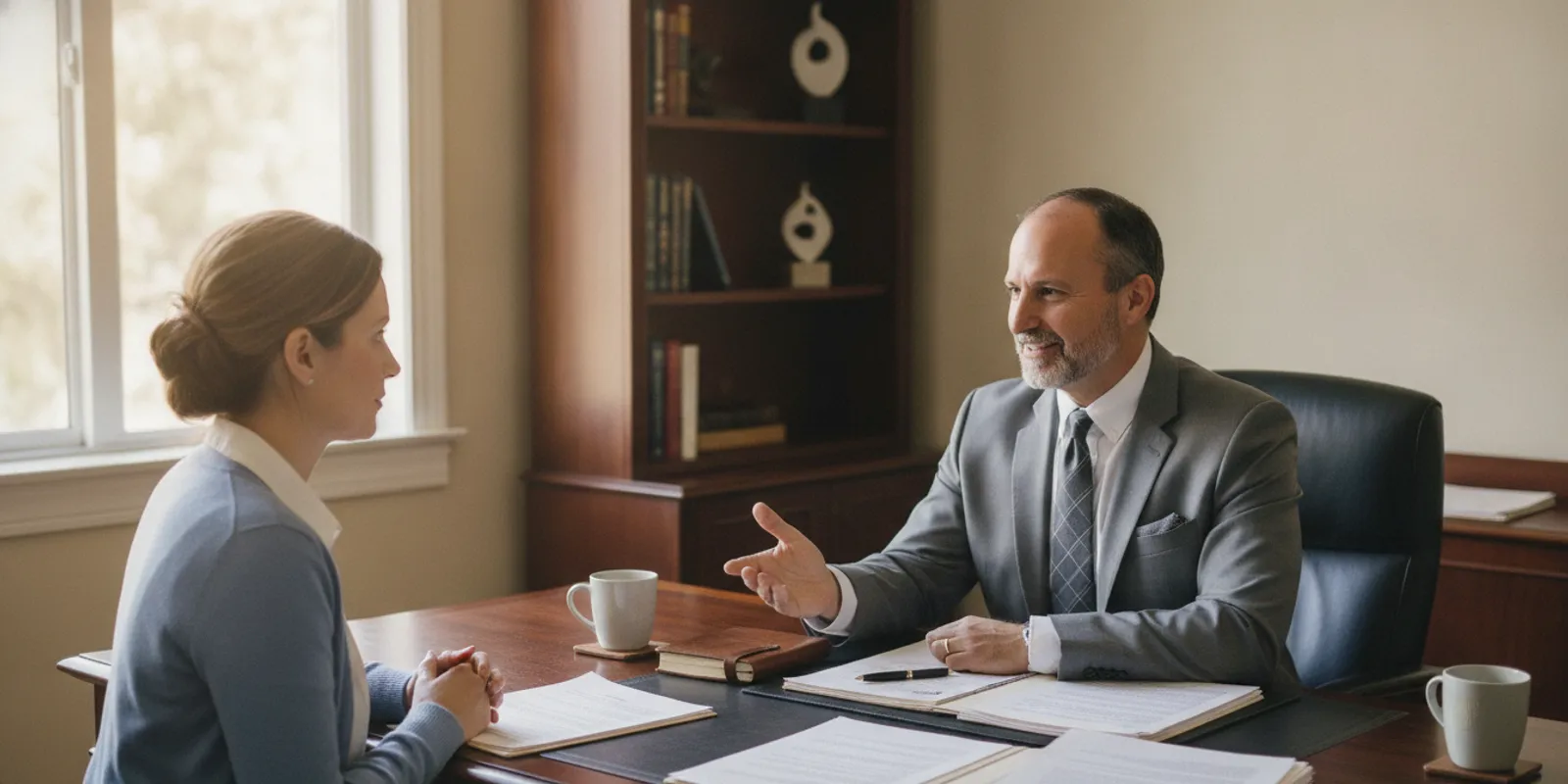
If you are looking for a personal injury lawyer roseville ca after a crash, you may be balancing medical appointments, calls from insurers, missed work, and uncertainty about what comes next. A first conversation can help you organize what is known, identify questions that need follow-up, and understand possible next steps without making a rushed decision.
Call Weinberger Law Firm at 916-357-6767 for a free consultation.
What should an initial conversation help you understand?
A useful initial conversation is not a promise about a claim or its value. It is a chance to explain the basic sequence of events and learn what information may be needed for a more complete review. The lawyer may ask where and when the crash happened, who was involved, whether anyone saw it, what injuries you noticed, what care you have received, and whether an insurer has contacted you.
Try to separate what you personally observed from what you assume. For example, “I was traveling north and saw the other car enter the intersection” is different from “the other driver must have been speeding.” The first describes a memory; the second draws a conclusion that may need evidence. If you are unsure about a detail, say so rather than filling the gap.
Weinberger Law Firm represents people injured by another party’s negligence throughout California, with local emphasis that includes Roseville, Sacramento, and Folsom. Joseph B. Weinberger has 38 years of California personal-injury experience, and the firm describes its approach as attorney-led and personal. The firm’s published results include settlements and verdicts, including multi-million-dollar awards; prior results do not predict what may happen in another matter.
What information may matter when a claim is reviewed?
Start with a simple, dated timeline. Note the approximate time, location, direction of travel, traffic signals or signs you remember, weather, road surface, and what happened immediately before and after impact. Include when symptoms first appeared and how they changed. A short timeline helps a lawyer see where accounts agree, where details are missing, and what may need independent confirmation.
- Names and contact details for drivers, passengers, and witnesses, if available.
- Vehicle descriptions, license plate details, and insurance information exchanged at the scene.
- Whether police or another agency responded, plus any report or incident number.
- Photos or video of the vehicles, damage, roadway, visible injuries, and surrounding conditions.
- Messages or notes made soon after the collision that help preserve your recollection.
- Changes in symptoms, activities, and work during the days and weeks afterward.
Keep original files when you can. Back up photos and messages rather than relying on one phone. If you need to explain what a picture shows, write a separate note instead of altering the original. Record the date you took it and the viewpoint if you remember. Do not try to enter private property, access another person’s vehicle, or obtain restricted recordings yourself.
Roseville crashes can happen at intersections, on busy roads, near freeway ramps, in parking areas, or on neighborhood streets. The setting may suggest useful evidence, but it does not decide fault by itself. A nearby camera might have recorded a short period; a witness might clarify signal timing; vehicle damage might help explain the point of impact. These are possibilities to note and discuss, not proof until the information is reviewed.
How can you document injuries and practical losses?
Keep the records you receive from medical providers, such as appointment summaries, discharge instructions, prescriptions, bills, and referrals. Follow your treating professionals’ guidance and direct medical questions to them. A lawyer cannot diagnose an injury or replace medical care.
A brief daily or weekly log can preserve concrete examples of how symptoms affect ordinary life. Rather than writing only “bad week,” record details such as difficulty sitting through a work shift, needing help carrying groceries, or waking when a particular movement causes pain. Note improvement as well as setbacks. Accuracy matters; do not exaggerate, and do not try to predict how long a symptom will last.
For work-related changes, retain pay statements, schedules, employer communications, and records of missed time or modified duties. If you are self-employed, preserve relevant business records that show work you could not perform. Keep copies and avoid turning estimates into documents that appear to be original records. The documents that may be useful depend on the situation, and a lawyer can identify questions for follow-up.
Potential categories in an injury claim may include medical expenses, lost wages, and pain and suffering, depending on the facts and applicable law. None is an automatic payment. Responsibility, available coverage, the evidence, and the nature of the injury can affect whether a loss is supported. Another person’s settlement or an online calculator is not a reliable substitute for reviewing your own circumstances.
How should you handle insurance calls and documents?
Insurance representatives may call to gather information or discuss a claim. You can be courteous while taking time to understand what is being requested. Before giving a recorded statement, signing a release, or accepting an offer, read the request and ask for time if you need it. If the implications are unclear, consider getting advice based on the actual document and facts.
Keep copies of letters, emails, claim numbers, and notes of calls. Record the date, who you spoke with, what was requested, and any response date mentioned. If you send a document, note when and how it was sent, and keep a copy. Do not ignore official notices or insurer communications; read them promptly and seek clarification when needed.
A useful comparison is between an informal conversation and a signed document. A call may simply request information, while a release or settlement agreement can have legal consequences. Do not assume that all requests are alike. Ask what the document does, what claims it addresses, and whether accepting it would resolve further requests related to the collision. A lawyer can review the particular wording; a general article cannot interpret your policy or agreement.
Why can deadlines and early evidence affect the next step?
Legal deadlines can limit how long a person has to bring a claim, and the time limit may vary with the parties and circumstances. Claims involving a public agency can have shorter claim-presentation requirements than ordinary claims. Do not assume there is ample time because treatment is continuing or an insurer is still investigating. Ask promptly whether a deadline may apply.
For general information about California court processes, see the California Courts website. It offers general court information, not advice about an individual injury claim or deadline. If a public vehicle, roadway condition, or public entity may be involved, flag that early for review.
Some evidence can become harder to find as time passes. Vehicles may be repaired, video may be overwritten, and witnesses may move or forget details. Preserve what you already have and make a note of evidence that might exist, such as a nearby business camera or an event recorder in a vehicle. Do not try to access restricted recordings yourself. A lawyer can discuss appropriate ways to request relevant material.
What does a contingency fee agreement explain?
Weinberger Law Firm uses a contingency-fee model: clients pay nothing upfront for attorney fees and pay a fee only if the firm recovers compensation. Before hiring a lawyer, read the written agreement and ask how the fee is calculated, what changes if a matter proceeds into litigation, and how case costs are handled. Make sure the written terms are clear to you.
| Agreement topic | What to check | Question to ask |
|---|---|---|
| Attorney fee | How the fee is calculated and whether it changes at different stages. | What fee applies if the case resolves before litigation, and what if it proceeds further? |
| Case costs | Which expenses may be advanced, and how they are accounted for. | How are costs handled if there is a recovery, and what if there is not? |
| Communication | Who will provide updates and how often. | Who should I contact when I have a question? |
| Client decisions | Which decisions require your approval and how they are discussed. | What decisions remain mine during the representation? |
Ask for plain-language explanations and take time to read the agreement. Do not rely on shorthand if the written document says something different. Request clarification before signing and keep a copy. Asking questions is a normal part of making an informed choice.
How can you prepare for a useful first conversation?
You do not need a complete file or a perfect timeline. If available, gather the crash date and location, other driver’s details, insurance claim number, names of treating providers, and photographs or report information. If you do not have something, say so. A missing report or bill should not prevent you from asking what information may matter.
Write down the questions most important to you. These can include:
- What information could help clarify responsibility for the crash?
- Are there time-sensitive steps I should ask about?
- How should I preserve records and communicate with the insurer?
- What would the firm need to review before discussing whether representation is appropriate?
- How do the fee and costs work under the written agreement?
After the conversation, make a note of what you understood, what remains uncertain, and any documents you were asked to provide. If you need to clarify an instruction, ask rather than relying on memory. You can also ask what the next step would be and whether there is anything time-sensitive.
A consultation does not guarantee that a firm will accept a case, establish an attorney-client relationship by itself, or provide a final evaluation without adequate information. It is an opportunity to explain the situation and learn about a possible process. You can take time to consider what you hear and review any proposed written terms before deciding.
How does local experience fit into a claim review?
Local context can make an account more concrete: where the crash occurred, how traffic moved, what road features were present, and whether witnesses or recordings may exist. It does not prove fault on its own. Evidence still needs to be gathered and considered alongside the facts and applicable law.
Weinberger Law Firm represents clients in Roseville and throughout California, with a local focus that includes Sacramento and Folsom. Readers can learn more on the firm’s Roseville injury lawyer page. Those considering representation in nearby Folsom can also review the firm’s Folsom car accident representation information. These pages describe services; a conversation is needed to address the details of a particular situation.
The firm’s published track record includes successful settlements and verdicts, including multi-million-dollar results. Those examples provide context about past matters, but every case depends on its own facts, injuries, evidence, coverage, and other circumstances. No past result promises a similar outcome.
Before deciding whether to speak with a lawyer, you can ask your questions without committing on the spot. The firm offers free consultations, and its contingency-fee approach means clients pay nothing upfront in attorney fees and only pay a fee if compensation is recovered. The written agreement should explain the terms that apply if you choose to proceed.
Call 916-357-6767 to request a free consultation.
Frequently Asked Questions
Should I speak with a lawyer while treatment is ongoing?
You can ask for a consultation while receiving care. You do not need to know the full course of recovery before asking about evidence or possible deadlines. Continue to rely on healthcare professionals for treatment, and understand that an early conversation may not establish a final claim value or outcome.
What if I do not have a police report?
Explain what you remember, whether officers responded, and whether you received an incident number. A report may be one source of information, but the lack of a copy does not prevent you from describing the crash. Do not guess about what a report says; if it is relevant, it may be possible to request it through appropriate channels.
Do I have to accept an insurance offer?
Understand the offer and any release before deciding. A signed release can affect whether you can pursue further payment for the same claim. Consider asking for time to review the terms and getting advice based on the specific documents and circumstances.
Will a consultation tell me exactly what a claim is worth?
Not necessarily. A fuller review can depend on evidence, medical progress, responsibility, available coverage, and other factors. An initial discussion may identify what is known and what information is still needed; be cautious about promises made before the relevant facts are reviewed.
After a crash, a careful record of what happened, your care, and the effects on daily life can make an initial conversation more useful. Take the time you need to ask questions and understand any proposed next steps.